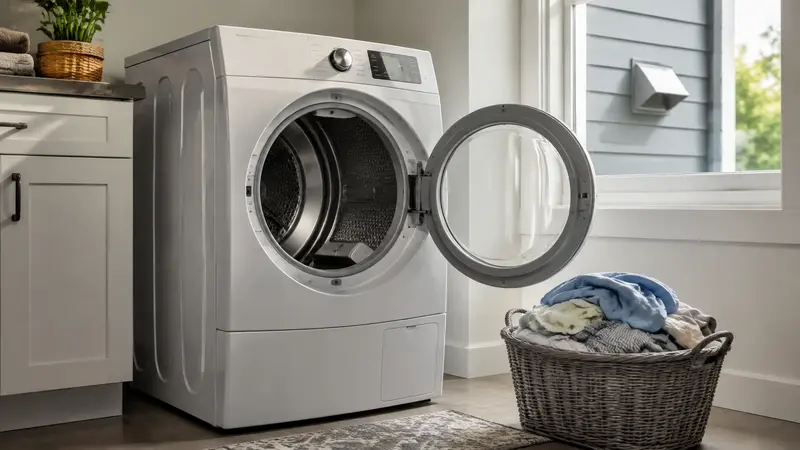
If your GE dryer shuts off after a few minutes, start with the lint filter, accessible vent path, load size, and selected cycle. A GE dryer that stops after 2 minutes can be ending an automatic cycle early, but it can also be responding to restricted airflow, overheating, interrupted power, or an internal motor or control problem.
Note whether the display goes dark, the drum stops and then restarts after cooling, or the cycle ends normally. Do not repeatedly restart a hot dryer: if it only runs again after a cool-down period, stop using it until the vent and appliance have been checked.
GE Dryer Shuts Off After 2 Minutes or After a Few Minutes
Note whether the display goes dark, the timer keeps counting, the
drum stops while heat remains, or the dryer can restart only after
cooling. Also note the load size, selected cycle, and whether a breaker
trips.
A dryer that stops only on an automatic sensor cycle may have a
different issue from one that loses all power on every cycle.
7 Common Causes of a GE Dryer Shutting Off Mid-Cycle
- Restricted exhaust airflow makes heat build up inside the dryer.
- A clogged lint filter reduces airflow even when the vent is clear.
- An oversized or uneven load interferes with tumbling and sensor contact.
- An automatic cycle ends early because the moisture sensors no longer detect damp fabric.
- A loose or interrupted power supply causes the display and motor to stop.
- Motor thermal protection opens when the motor overheats, often allowing a restart only after cooling.
- A switch, sensor, timer, or control fault interrupts the cycle and requires model-specific diagnosis.
Safe Checks in the Right
Order
1. Clean the Lint Filter
Remove lint before every load. Wash the screen only if the manual
permits it and residue is blocking airflow; dry it completely before
reinstalling. Never operate the dryer without the filter.
2. Inspect the Exhaust Path
Turn the dryer off and inspect the user-accessible transition duct
behind it for crushing, sharp bends, or visible lint. Outside, make sure
the exhaust hood opens freely while the dryer runs and is not blocked by
lint, snow, debris, or an animal nest.
Do not disconnect the vent and exhaust a dryer into the room.
Gas-dryer exhaust contains combustion products, and all dryers release
moisture and lint.
3. Reduce the Load
An oversized load restricts tumbling and airflow. Remove items and
test with a small, similar-fabric load. Heavy mixed items may confuse
moisture-sensing cycles and take much longer to dry.
For a dryer that stays running but dries slowly, follow our dryer
taking too long to dry guide.
4. Try a Timed Cycle
If the dryer stops only during an automatic cycle, test a short timed
cycle with a small damp load, following the manual. A sensor cycle may
end early when sensors do not detect moisture or when the load does not
contact them consistently.
Do not use repeated long, high-heat tests if the dryer becomes
unusually hot.
5. Check Power
Without Electrical Disassembly
Confirm the cord is fully inserted and the dedicated breaker has not
tripped. Electric dryers typically use a double-pole breaker. If a
breaker trips again, leave it off and call a qualified electrician or
technician.
Do not open the receptacle, cord terminal block, or control panels.
Heat, discoloration, buzzing, or a burning smell at the outlet requires
immediate professional attention.
6. Allow the Dryer to Cool
Once
If the cabinet is very hot and the machine restarts only after
cooling, stop using it until the airflow path and dryer are inspected.
Never bypass a thermal fuse, high-limit thermostat, or motor
protector.
GE Dryer Starts Then Stops
If your GE dryer starts normally, runs briefly, and then stops, this is different from a dryer that will not start at all. First note whether the display goes dark, the drum stops while the display remains on, or the dryer restarts only after it has cooled. Check the lint filter, accessible vent path, load size, selected cycle, plug, and breaker without opening panels. Repeated stops can point to overheating, interrupted power, a door-switch issue, or a model-specific motor, sensor, or control problem that needs diagnosis.
GE Dryer Stops Mid-Cycle
A GE dryer that stops mid-cycle should not be repeatedly restarted, especially if it is unusually hot. Clean the lint filter, inspect the visible transition duct and exterior vent hood for weak airflow or lint, and try a small comparable load on a timed cycle if the manual allows. Stop using the dryer and arrange service if it loses power, trips the breaker, smells hot or burnt, makes electrical noises, or continues shutting off after the basic airflow and power checks.
Why Does My GE Dryer Keep Shutting Off?
A GE dryer keeps stopping for different reasons depending on the pattern. If it stops after a few minutes and restarts after cooling, heat buildup or motor thermal protection is a concern. If it stops and starts only on an automatic cycle, test a short timed cycle with a small damp load as the manual allows. If it always stops at the same point, loses the display, or happens only with certain large or mixed loads, record those details for service rather than assuming a single failed part.
A GE dryer keeps turning off when airflow is restricted, the load cannot tumble properly, power is interrupted, or a safety/control condition interrupts the cycle. Clean the filter, check the accessible duct and exterior hood, leave space around the appliance, and confirm the cycle and options before arranging repair. If it runs but takes much longer than usual, see our GE dryer taking too long to dry guide.
GE-Specific Clues: 2-Minute Shutoff, Sensor Dry, and Timed Dry
GE Appliances documents an important distinction that can prevent a false diagnosis. On certain GE Profile dryers with automatic no-load detection, a sensor cycle can stop after about two minutes when the machine does not detect a load. GE also notes that a dryer tilted toward the rear can move clothing away from the sensor rods on affected designs. If your GE dryer stops very quickly only on an automatic cycle, test with a normal damp load and confirm the appliance is level before assuming that the motor or control has failed.
GE also explains that automatic cycles do not behave like Timed Dry. During an automatic cycle, the timer may advance intermittently as temperature or moisture sensing controls the cycle. A short Timed Dry test with a small damp load can therefore help separate normal sensor-cycle behavior from a dryer that actually loses power or stops tumbling unexpectedly.
If the dryer repeatedly stops mid-cycle on both automatic and timed settings, especially if it becomes unusually hot or restarts only after cooling, stop repeated testing. GE identifies restricted venting, motor overheating, door-latch problems, and moisture-sensor issues among possible causes that may require further diagnosis.
Sources: GE Appliances support guidance on dryer timer behavior and GE Appliances Factory Service guidance for dryers that keep shutting off.
When Early Shutoff Can Be Normal
On some GE models, an empty automatic cycle can stop after only a few minutes because the dryer senses no damp load. Automatic cycles also cycle the heat on and off, and an Extended Tumble option may continue unheated tumbling after drying ends. Compare the display, cycle, and option lights with the owner’s manual before assuming a part has failed.
If the drum keeps running but there is no heat, use our GE dryer not heating guide. That is a different symptom from a complete mid-cycle shutdown.
When Early Shutdown Is
a Safety Warning
Disconnect the dryer and do not retry it if you notice:
- A burning or melting-plastic smell.
- Smoke, sparking, or electrical buzzing.
- A hot, scorched, or loose plug or outlet.
- Repeated breaker trips.
- Gas odor.
- The cabinet becomes excessively hot.
For gas odor, avoid flames and electrical switches, leave the area,
and contact the gas utility or emergency service from a safe
location.
When to Call a Technician
Arrange service when the vent is clear, the load is appropriate, and
the dryer still shuts off early. Internal possibilities include motor
overheating, wiring, switches, sensors, or controls, but the symptom
alone cannot identify a part.
Call sooner if the dryer needs a cool-down period before restarting,
loses all power, or produces unusual noises. If it fails to restart at
all, continue with the separate dryer won’t
start guide.
Frequently Asked Questions
Why does my GE dryer keep stopping?
Start by comparing automatic and timed cycles, then check the lint screen, accessible vent path, load size, and power symptoms. A machine that stops after cooling, loses power, or acts erratically needs professional diagnosis.
Why does my GE dryer shut off after a few minutes?
Check for restricted airflow, unusual heat, a large load, automatic-cycle behavior, and power symptoms. If it repeatedly stops after a cool-down period, do not keep restarting it; professional diagnosis is appropriate.
Why does my GE dryer start and then stop?
When a dryer starts but stops shortly afterward, compare the display and drum behavior, clean the lint filter, check the accessible vent path and power connection, and use the owner’s manual for the selected cycle. A repeated pattern can require model-specific service.
Why does my GE dryer stop mid-cycle?
Mid-cycle stopping can follow restricted airflow, overheating, interrupted power, a door-switch issue, or an internal control or motor problem. Stop using it if there is overheating, a burning smell, electrical noise, or a repeated breaker trip.
Should I keep using a dryer that keeps shutting off?
No. Do not continue using it if it is very hot, smells burnt, has a hot plug or cord, makes electrical noises, trips the breaker, or keeps stopping after the safe airflow and power checks.
Can overheating make a GE dryer turn off?
Yes. Restricted airflow or an overheating motor can cause a protective shutdown. Stop using a dryer that becomes very hot, smells burned, or only restarts after cooling.
When should I call a technician?
Call promptly for smoke, burning odor, a hot cord or plug, electrical noises, repeated breaker trips, strong overheating, or shutdowns that continue after the filter, visible vent path, load, and cycle have been checked.
GE Appliances reference: Why
does my dryer keep shutting off?.
Why does my GE
dryer stop after five minutes?
Possible causes include restricted airflow, overheating, an
automatic-cycle sensing issue, power interruption, or an internal motor
or control fault.
Can a clogged vent
make the dryer shut down?
Yes. Restricted exhaust can raise dryer temperature and contribute to
safety shutdowns. Clean the entire vent path and exterior hood.
Why does it restart after
cooling?
That pattern can indicate overheating or a motor protection
condition. Stop repeated testing and arrange diagnosis.
Should I reset a tripped
dryer breaker?
You may reset it once after confirming no obvious damage. If it trips
again, leave it off and contact a professional.
Can I bypass
the thermal fuse to test the dryer?
No. Thermal devices are fire-safety components and must never be
bypassed.
Why does it stop
only on an automatic cycle?
The moisture-sensing system may believe the load is dry, or
small/mixed items may not contact the sensors consistently. Compare with
a short timed cycle as the manual allows.