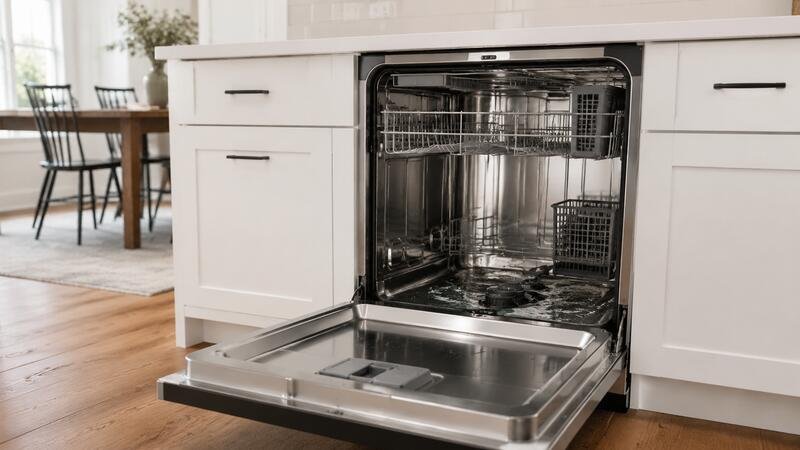
Standing water in the bottom of a dishwasher usually means the machine could not move wastewater through its normal drain path. The good news is that the cause is often a clogged filter, a blocked garbage disposal connection, or a kinked drain hose—not a failed dishwasher.
This guide starts with the safest, simplest checks. Stop and call a qualified appliance technician if you find damaged wiring, a leaking pump, a burning smell, or a repair that requires electrical testing.
First: Is a Small Amount of Water Normal?
A thin layer of clean water below the filter area can be normal on some models because it helps keep seals from drying out. A visible pool covering the tub floor, dirty water returning after a cycle, or water that reaches the lower spray arm is not normal.
What to Do Before Troubleshooting
- Cancel the cycle and wait for all movement to stop.
- Turn off the dishwasher at the breaker or unplug it if the plug is safely accessible.
- Place towels around the base and remove the lower rack.
- Scoop standing water into a container, then absorb the remainder with towels or a wet/dry vacuum.
- Check the owner’s manual before removing model-specific parts.
8 Common Reasons a Dishwasher Will Not Drain
1. The dishwasher filter is clogged
Food particles, labels, glass fragments, and grease can restrict the removable filter near the bottom of the tub. Unlock the filter according to the manual, rinse it under warm water, and gently clean the mesh with a soft brush. Do not force the filter or use a wire brush that could damage it.
2. Debris is blocking the sump area
After removing the filter, inspect the exposed sump area with a flashlight. Look for food, broken glass, paper, or small utensils. Wear cut-resistant gloves and avoid reaching into openings you cannot see. Reinstall every cover and filter exactly as the manual specifies.
3. The garbage disposal connection is blocked
Many U.S. dishwashers drain through the garbage disposal. Run the disposal briefly with water to clear ordinary food waste. If the disposal was recently installed, confirm that the dishwasher inlet knockout plug was removed during installation. A new disposal with the plug still in place will completely block dishwasher drainage.
4. The sink drain or air gap is clogged
If the kitchen sink drains slowly, the dishwasher may have nowhere to send its water. Clear the sink problem first. Homes with a countertop air gap should have its cap removed and the accessible debris cleaned out. Water spilling from the air gap during a drain cycle commonly points to a restriction downstream.
5. The drain hose is kinked or pinched
Inspect the hose under the sink and behind the machine only if it is safely accessible. Straighten gentle kinks without crushing or puncturing the hose. Make sure stored items under the sink are not pressing against it. Do not pull the dishwasher out unless you can do so without damaging the floor, water line, power connection, or mounting brackets.
6. The drain hose is installed incorrectly
A hose without the required high loop or air gap can allow dirty sink water to flow back into the dishwasher. Installation rules vary by model and local plumbing code. Compare the routing with the installation manual rather than guessing at the proper height or connection.
7. The drain pump is jammed or damaged
A humming noise during the drain portion of the cycle may mean the pump is trying to run but cannot move water. Silence can indicate a pump, wiring, control, or door-latch problem. Pump access commonly requires disassembly and electrical testing, so this is usually the point to arrange professional service.
8. A control or door-latch problem interrupted the cycle
The dishwasher may not complete its drain command if the door does not latch, the cycle was interrupted, or the electronic control has an error. Close the door firmly, select Cancel/Drain if your model has that function, and follow the manual’s reset procedure. Avoid repeatedly resetting a machine that trips a breaker or displays the same fault code.
A Safe Step-by-Step Drain Test
- Clean and reinstall the filter.
- Clear the sink, disposal, and accessible air gap.
- Verify that the visible drain hose is not kinked.
- Restore power.
- Run Cancel/Drain or a short rinse cycle while watching the sink connection for leaks or backups.
- Turn the machine off immediately if water leaks, the pump makes grinding sounds, or an electrical odor appears.
Dishwasher Not Draining Completely
Partial or slow draining can leave a shallow pool after the cycle even though some water reaches the sink. Check the removable filter, visible hose, sink or disposal drainage, and excess suds first. Do not assume the drain pump has failed based only on slow drainage.
Dishwasher Won’t Drain After the Cycle
Standing water immediately after a wash cycle usually points to an interrupted drain path or cycle. Water that drains and then returns later, especially while the dishwasher is off, is a different symptom that can involve backflow or the supply side; use our water in the bottom of a dishwasher guide for that situation.
When to Call an Appliance Repair Professional
Schedule service if the dishwasher still will not drain after the accessible filter and plumbing checks, if the drain pump only hums, if the breaker trips, or if water is leaking from underneath the appliance. A technician can safely test the pump, wiring, door switch, and electronic control.
How to Help Prevent Future Drain Problems
- Scrape large food scraps and paper labels from dishes.
- Clean the filter on the schedule recommended in the manual.
- Use automatic dishwasher detergent—not liquid hand dish soap.
- Run the garbage disposal before starting the dishwasher when they share a drain.
- Keep the under-sink drain hose free from stored-item pressure.
Frequently Asked Questions
Can I run a dishwasher with water standing in the bottom?
It is better to remove the water and identify the restriction first. Another full cycle can cause dirty-water backup, poor cleaning, odors, or a leak.
Will baking soda and vinegar unclog a dishwasher?
They are not a reliable fix for a blocked filter, hose, disposal inlet, or failed pump. Some manufacturers also warn against unapproved cleaners. Use only cleaning methods allowed in your owner’s manual.
Why did my dishwasher stop draining after a new garbage disposal was installed?
The installer may have left the disposal’s dishwasher-inlet knockout plug in place. The dishwasher hose can be connected normally while the internal plug still blocks all flow.
How much does a dishwasher drain-pump repair cost?
Cost varies by brand, model, labor rate, access, and whether another part caused the failure. Ask for a diagnosis and written estimate before approving the repair.
Why is my dishwasher not draining completely?
A partial restriction, excess suds, a slow sink drain, or a visible hose problem can slow drainage. Start with accessible checks before arranging internal repair.
Can a clogged filter stop a dishwasher from draining?
Yes. Food debris and small objects can restrict flow through an owner-removable filter. Clean it only as the model manual directs.
Can the drain hose cause the problem?
Yes. A kink, pinch, or incorrect routing can restrict or reverse flow. Inspect only the accessible portion and compare it with the installation instructions.
Why does water come back after the dishwasher drains?
Water returning later may be backflow from the sink or disposal, or clean supply water entering while the dishwasher is off. That is distinct from a normal end-of-cycle drain problem.
Should I reset the dishwasher?
Use only the reset or Cancel/Drain method described in the model manual. A reset may clear an interruption but does not repair a recurring drainage fault.
When should I call a technician?
Call for a persistent drain failure after the safe checks, a loud abnormal noise, a leak, burning smell, repeated breaker trip, or any repair requiring internal access.
For more household troubleshooting, visit the Appliance Fix Answers home page, read our guide to a refrigerator that is not cooling, or see what to check when an oven is not heating.
Related troubleshooting: If the dishwasher drains normally but leaves food or detergent behind, use our dishwasher not cleaning dishes guide.
Related: If a Bosch dishwasher shows E15, do not treat it as a routine drain clog. Follow our Bosch E15 leak-protection guidance.