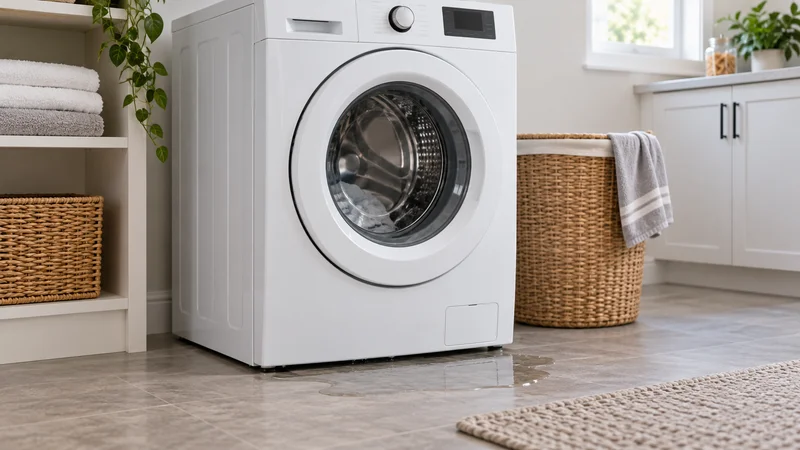
If your Samsung washer is leaking from the bottom, the water may be coming from higher up and traveling down the cabinet before it reaches the floor. Common sources include supply hoses, the detergent dispenser, door area, drain hose, filter area, or an internal hose or pump housing. The safest way to narrow it down is to identify when the leak starts and the highest wet point you can see without opening the machine.
Samsung Washer Leaking From Bottom: What to Check First
Stop the cycle and close the hot and cold supply valves if they are safely accessible. Disconnect power only from a dry location. If water is around the outlet, plug, or electrical connections, stay away and arrange professional service. Do not tilt a loaded washer, reach underneath it, or run it with panels removed.
1. Supply Hose or Faucet Leak
If water appears before a cycle begins or while the washer is off, inspect the wall faucets and visible supply-hose connections first. These remain pressurized even when the washer is not running. A drip at the rear can travel underneath the cabinet and look like a bottom leak.
2. Detergent Dispenser Overflow
If the leak starts during filling, look for a wet trail below the detergent drawer or down the front or side of the cabinet. Excess detergent, heavy suds, residue, or a dispenser problem can allow water to escape and run to the bottom.
3. Door or Door Seal Leak
On a front-load Samsung washer, inspect the outside of the door and the visible seal area for water tracks, trapped clothing, residue, or damage. If the leak clearly starts at the door, see our Samsung washer leaking from door guide.
4. Drain Hose or Household Drain Problem
If water appears when the drain pump starts, watch the drain hose and household standpipe from a safe distance. A loose or damaged external drain hose, or a standpipe that backs up, can send water under the washer even when the appliance itself is not leaking internally.
5. Filter Area Leak
On Samsung models with an accessible drain-filter area, water can appear near the lower front if the filter cap is not seated correctly, the seal is dirty, or water remains around the service area. Do not assume every Samsung washer has the same filter design. If the leak is clearly at the filter area, use our Samsung washer filter leaking guide.
6. Too Many Suds
Too much detergent or the wrong detergent type can create excessive foam. Suds may escape through the dispenser, venting path, or door area and then collect underneath the machine. Use HE detergent where required and follow the detergent and washer instructions rather than treating the MAX line as a target dose.
7. Leak During the Spin Cycle
A leak that appears mainly during spin can be related to movement, a hose connection, drainage, or water that was already inside the cabinet. If the timing is clearly tied to spinning, see our Samsung washer leaking during spin cycle guide.
8. Internal Hose, Pump Housing, or Tub Leak
If the exterior connections stay dry but water emerges from inside the base, the source may be an internal hose, pump housing, dispenser-to-tub path, or outer tub. Do not remove panels or reach inside to confirm it. Internal leak diagnosis is safer for a qualified technician.
9. Water From Another Location Is Reaching the Bottom
The largest puddle is not always directly below the failed part. Water can run down the cabinet from the door, dispenser, rear hoses, or another point and finally emerge underneath. Dry the accessible exterior after shutting off power and water, then look for the highest visible wet trail.
Samsung Front Load Washer Leaking From Bottom
For a front-load washer, pay special attention to the door area, lower service/filter area, detergent drawer, drain hose, and visible rear connections. We also have a dedicated Samsung front load washer leaking from bottom guide for this specific layout.
Samsung Top Load Washer Leaking From Bottom
For a top-load washer, inspect the visible supply hoses, drain hose, upper rim, dispenser area, and signs that water or suds may have spilled from above before reaching the floor. See our Samsung top load washer leaking from bottom guide for top-load-specific checks.
Safe Troubleshooting Order
- Stop the cycle and isolate water and power safely.
- Record the model number and any displayed error.
- Photograph the original wet area before drying the floor.
- Check visible supply-hose and faucet connections.
- Check the drain hose and household standpipe.
- Inspect the visible door, dispenser, and accessible filter area where applicable.
- Review detergent type and dosage.
- Only after correcting an obvious external cause and drying everything should you consider one attended test with all covers closed.
When to Call a Professional
Arrange appliance service if water is coming from inside the cabinet, the leak returns after external checks, the door seal is damaged, a housing appears cracked, or water is close to wiring. Contact a plumber if the wall valves or household drain are leaking or backing up. Keep the washer off if you notice a burning smell, sparking, or repeated breaker trips.
FAQ
Why is my Samsung washer leaking from the bottom?
The source may be a supply hose, detergent dispenser, door area, drain hose, filter area, internal hose, pump housing, or household drain. The cycle stage and highest wet point are the best clues.
Why does my Samsung washer leak from the bottom only during a cycle?
The timing can narrow the source. Leaks during fill suggest supply or dispenser paths, while leaks during drain or spin point more toward drainage, hoses, or water already inside the cabinet.
Does a Samsung washer leaking from underneath always mean the drain pump is bad?
No. Water often travels from another part of the washer before reaching the floor. A bottom puddle alone does not identify the failed component.
Can too much detergent make a Samsung washer leak from the bottom?
Yes. Excess suds can escape from the dispenser, door area, or venting path and eventually collect underneath the machine.
Can I keep using the washer if the leak is small?
No. Even a small leak can worsen or reach electrical parts. Stop using the washer until the source has been identified and corrected.
Should I reset the washer to stop the leak?
A reset cannot seal a damaged hose, cap, seal, or housing. Find the water source first rather than repeatedly resetting the machine.
Manufacturer reference: Samsung US washer leak troubleshooting. Follow the manual for your exact model.