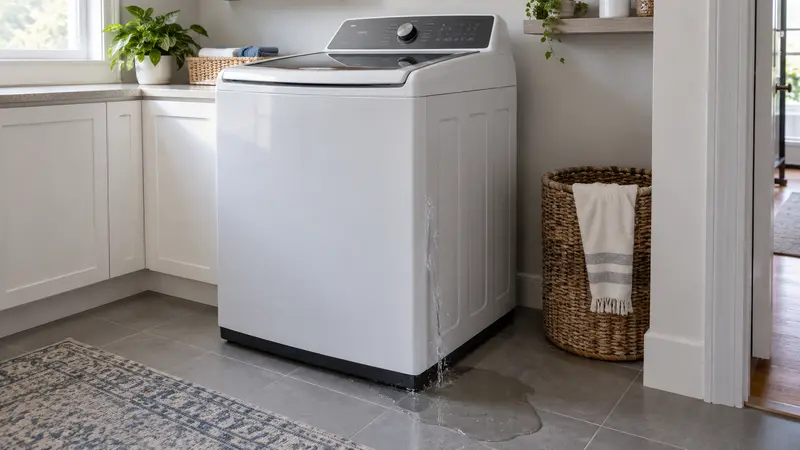
A Samsung washer leaking water is easiest to diagnose by timing the first drip. Stop the machine, unplug it, close the hot and cold faucets, and dry the floor. Then record whether water appeared while the washer was off, filling, washing, draining, or spinning. Each stage activates different components.
What the leak timing tells you
Water appears while the washer is off
Suspect a pressurized supply connection, faucet, inlet hose, or inlet valve that is not closing fully. If water slowly enters the drum while the appliance is off, keep the supply valves closed and arrange service.
Leak begins during fill
Inspect the inlet connections, dispenser, and visible dispenser flow path. A blocked drawer channel, incorrect detergent insert, hardened product, or excessive water pressure can send water over the dispenser edge. An internal inlet-valve or fill-hose leak needs a technician.
Leak begins during washing
Front-loaders may leak past debris or damage at the door boot. Top-loaders may splash if badly out of level, overloaded, or producing too many suds. A cracked internal hose can also leak only after the tub contains water.
Leak begins during drain or spin
Drain flow puts the hose, standpipe, pump, filter seal, and tub-to-pump hose under the greatest demand. Spin vibration can expose a marginal connection or make water already inside the cabinet emerge.
Safe diagnostic sequence
- Isolate power and close both supply faucets.
- Dry every visible surface so a fresh drip is obvious.
- Check the faucets, inlet hoses, drain hose, and standpipe without pulling on plumbing.
- Verify that HE detergent is used and reduce the dose for soft water or small loads.
- On front-load models, clean the door glass and gasket folds. Remove only loose lint or hair.
- If your model has a user-accessible pump filter, follow its manual exactly. Drain residual water into a shallow pan before opening it, then reseat the filter and emergency-hose cap firmly.
- Run a short, empty, monitored rinse only if the external area is dry and safe. Stop at the first sign of leakage.
If the water specifically pools underneath, use our Samsung washer underneath-leak guide. For a leak tied to high-speed operation, see Samsung washer leaking during spin. If the display shows a supply fault, our Samsung 4C error guide explains the safe inlet checks.
Components a technician may test
The likely list changes with cycle timing: inlet valve and fill tubes during fill; door boot, dispenser hose, or outer tub during wash; drain pump, pump housing, filter seal, and drain hoses during drain; and tub seal or a loose internal connection when vibration is highest.
When to Call a Professional
Stop DIY if the leak is internal, the pump housing is cracked, the inlet valve passes water while off, the tub or bearing area is wet, the appliance trips power, or access requires removing a panel. Shut off water until repaired if leakage continues while idle.
FAQ
Why does my Samsung washer leak water only on large loads?
Large loads can deflect a front-load gasket, create splashover in a top-loader, worsen imbalance, or expose an internal leak at a higher water level.
Can a clogged household drain look like a washer leak?
Yes. A standpipe can overflow only when the pump discharges quickly, leaving water behind or beneath the machine.
Is a small drip safe to ignore?
No. A small leak can damage flooring and may reach electrical parts. Find the source before normal use.
Always compare these steps with Samsung’s official leak guidance and the manual for your exact model.