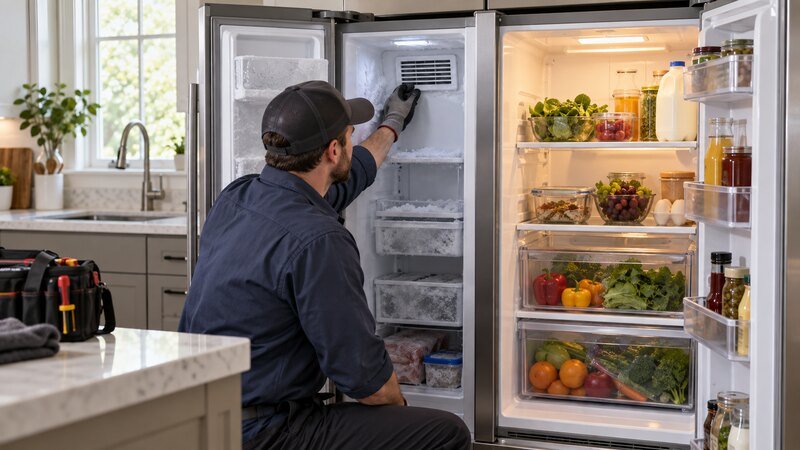
A LG refrigerator making a loud noise can be normal if it is a brief hum, water movement, clicking, or ice dropping. A persistent grinding, scraping, loud buzz, or vibration—especially with cooling trouble—needs attention.
Safety first: Unplug the refrigerator before removing panels or touching wiring. Do not use sharp tools or concentrated heat on ice.
Normal Behavior vs. a Problem
Short humming as the compressor starts, water trickling, a light pop as plastic expands, and ice falling into the bin are usually normal. The sound should be intermittent and should not be accompanied by warm food, a burning smell, or heavy vibration.
Common Causes
1. A cabinet, drain pan, or item on top is vibrating against another surface.
For LG appliances, use the full model number when checking the manual because panel messages, filter access, and diagnostic procedures can vary by series.
2. The ice maker is calling for water with no usable water supply, or the inlet valve is noisy during filling.
For LG appliances, use the full model number when checking the manual because panel messages, filter access, and diagnostic procedures can vary by series.
3. An evaporator fan is contacting frost or a loose cover inside the freezer.
For LG appliances, use the full model number when checking the manual because panel messages, filter access, and diagnostic procedures can vary by series.
4. A condenser fan, compressor mount, or rear panel is producing excessive vibration.
For LG appliances, use the full model number when checking the manual because panel messages, filter access, and diagnostic procedures can vary by series.
5. A failing fan motor or compressor is making a persistent mechanical noise.
For LG appliances, use the full model number when checking the manual because panel messages, filter access, and diagnostic procedures can vary by series.
Safe Step-by-Step Troubleshooting
Step 1
Identify where the sound comes from: freezer, rear lower area, water dispenser, or ice maker.
Step 2
Make sure the cabinet is level, has clearance, and is not touching a wall or cabinet.
Step 3
Move containers away from interior vents and remove anything resting on top.
Step 4
If the noise occurs during ice or water use, check that the water supply is fully open and the ice maker is configured for a connected line.
Step 5
If a fan is scraping ice or cooling is weak, do not force panels or chip ice with sharp tools.
Step 6
Unplug before inspecting an accessible rear cover; leave fan or compressor diagnosis to a technician.
Components That May Be Involved
Ice maker, water inlet valve, evaporator fan, condenser fan, compressor mounts, drain pan, and compressor.. Part numbers and test values are model-specific, so do not replace a part based only on a symptom.
When to Call a Professional
Call a qualified technician if the symptom returns after the safe checks, the appliance trips a breaker, leaks, smells hot or burnt, loses cooling or heat, or needs internal electrical, sealed-system, gas, or disassembly work.
Frequently Asked Questions
I
s
A
W
h
T
h
C
a
Y
e
Related Troubleshooting Guides
Refrigerator Making a Loud Noise · LG refrigerator cooling checks · Refrigerator Not Cooling