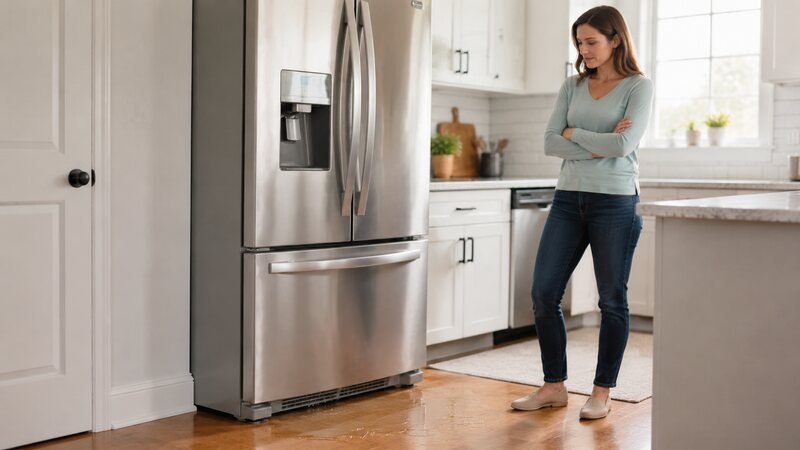
A refrigerator leaking water can turn a small appliance problem into damaged flooring or cabinets. The location and timing of the leak usually provide the best clues. Start with the simple, visible checks below, and stop if the leak involves damaged wiring, a pressurized water connection you cannot shut off, or a sealed refrigeration component.
Safety first: If water is near an outlet, cord, or electrical components, do not step in it or touch the refrigerator. Switch off the appropriate breaker if you can do so from a dry location, then call a qualified professional. For other inspections, unplug the refrigerator and close its water supply valve before moving it.
Where is the water coming from?
Dry the floor and visible surfaces, then note where water reappears. A puddle at the back often points to the supply line or its connections. Water inside the fresh-food compartment may come from a filter, dispenser, condensation, or a blocked defrost drain. Water near the front can be carried forward by an unlevel cabinet or a drain pan problem.
Common reasons a refrigerator leaks water
1. A loose or damaged water supply line
Refrigerators with an ice maker or water dispenser normally connect to a small household water line. A loose fitting, split tube, or pinched line can leak continuously or only while the ice maker fills. Close the shutoff valve, unplug the refrigerator, and inspect only the visible line and connections. Do not overtighten compression fittings. Replace visibly cracked tubing with the type specified for the refrigerator and local plumbing requirements, or call a plumber or appliance technician.
2. The water filter is not seated correctly
A leak that begins soon after a filter change often traces to an incorrectly installed, incompatible, cracked, or damaged filter. Follow the owner’s manual to remove and reinstall it. Confirm that protective caps were removed, O-rings are present and undamaged, and the filter locks fully into position. Use a filter approved for the model. If the housing itself is cracked, stop using the dispenser and arrange service.
3. A blocked or frozen defrost drain
During automatic defrost, meltwater should travel through a drain to a pan beneath the appliance. A blockage can send water under crisper drawers, onto the freezer floor, or eventually onto the kitchen floor. Check that food packages are not covering an accessible drain opening. Do not chip ice with a knife, screwdriver, or heat gun; those methods can puncture a liner or damage wiring. Because drain access varies widely by model, use the manufacturer’s instructions or have a technician clear an internal blockage.
4. The refrigerator is not level
Some models need a slight backward tilt so doors close and defrost water flows correctly. Place a level on top of the cabinet and compare the result with the installation guide. Adjust only the leveling feet or rollers described in the manual. Get help moving the refrigerator because it is heavy and can tip or damage flooring.
5. A drain pan is displaced or damaged
The drain pan normally holds defrost water until it evaporates. A small amount of water there can be normal. A pan that is cracked, out of position, or overflowing may create a puddle underneath. Inspect it only if the manual identifies safe access without removing electrical panels. A recurring overflow may indicate a different drainage or airflow problem.
6. Excess condensation or an incomplete door seal
Warm, humid air entering the refrigerator can create excess moisture. Check for packages that prevent the door from closing, clean the gasket with mild soap and water, and make sure the cabinet is level. A torn or loose gasket may need model-specific replacement. If the refrigerator is also warming up, work through our refrigerator not cooling checks.
Step-by-step checks you can do safely
- Keep people away from the wet area and protect the floor with towels.
- If electricity and water may be in contact, turn off the breaker from a dry location and call a professional.
- For a non-electrical leak, unplug the refrigerator and close the water shutoff valve.
- Dry the appliance and floor so a fresh drip is easier to locate.
- Inspect the visible supply line, shutoff valve, filter, door gasket, and accessible drain pan.
- Check whether the leak occurs continuously, after dispensing water, after an ice-maker fill, or after a defrost cycle.
- Correct only simple installation issues covered by the owner’s manual, then monitor the area through several operating cycles.
When to stop DIY and call a technician
Arrange professional service if water is near live electrical parts, the shutoff valve will not close, tubing is concealed in a wall or cabinet, the filter housing or internal pan is cracked, the defrost drain requires disassembly, or the leak returns after visible connections are corrected. Also stop if you smell burning, hear electrical arcing, see damaged wiring, or cannot move the appliance safely.
How to reduce the chance of another leak
- Inspect the visible water line and connections periodically.
- Replace filters on the manufacturer’s schedule and install the exact compatible type.
- Keep food away from vents and accessible drain openings.
- Clean door gaskets and confirm doors close without obstruction.
- After moving the refrigerator, recheck its level and the water line for kinks.
Frequently asked questions
Why is my refrigerator leaking water from underneath?
Common possibilities include a leaking supply line, a displaced or cracked drain pan, or defrost water that is not reaching the pan correctly. Shut off the water supply and unplug the appliance before inspecting visible parts.
Why did the leak start after I changed the water filter?
The filter may not be fully locked in place, may have a damaged seal, or may not be compatible with the model. Reinstall it exactly as the owner’s manual directs. A damaged housing requires service.
Can I keep using a refrigerator that is leaking?
Do not ignore an active leak. Water can damage the home and create an electrical hazard. Shut off the refrigerator’s water supply if applicable, protect the area, and correct or professionally diagnose the source.
Is water in the drain pan normal?
Yes, some defrost water in the pan is normally expected and should evaporate. Water reaching the floor, a damaged pan, or repeated overflow is not normal.