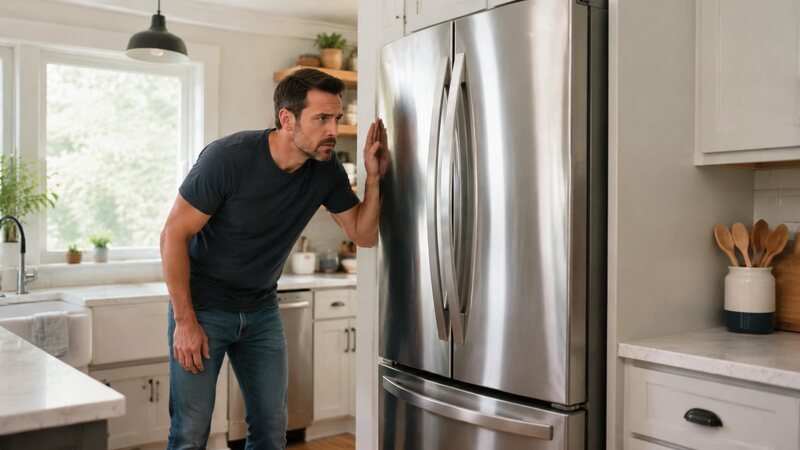
A refrigerator making a loud noise is not always failing. Modern refrigerators hum, click, gurgle, and hiss as fans, valves, refrigerant, and automatic defrost systems operate. The useful question is whether the sound is normal for the model or new, unusually loud, continuous, or paired with poor cooling.
Safety first: Unplug the refrigerator before cleaning around accessible mechanical areas or moving it. Do not remove a service panel, touch wiring, or reach near a moving fan. If you hear electrical buzzing with a burning smell, see sparks, or the cord or outlet feels hot, stop using the appliance and call a qualified professional.
Identify the sound before troubleshooting
Listen from the front, back, inside the freezer, and near the bottom without opening panels. Note whether the sound happens when a door opens, when the ice maker fills, when the compressor starts, or only after the refrigerator has been unused. A short recording can help a technician if the noise is intermittent.
Normal refrigerator sounds
- Low humming or whirring: fans and the compressor running.
- Clicking: controls, relays, or valves switching during normal cycles.
- Hissing, sizzling, or dripping: water reaching the defrost heater during an automatic defrost cycle.
- Gurgling: refrigerant or defrost water moving through tubing.
- Brief buzzing: a water valve operating while the ice maker fills.
- Short thumps: ice dropping into the storage bin or a water line responding to a fill cycle.
Your owner’s manual may list model-specific operating sounds. A normal sound can seem louder after installation, after a power interruption, or when the doors have been open and the refrigerator is working harder to recover temperature.
Common causes of unusually loud refrigerator noise
1. The cabinet is touching a wall or nearby object
Vibration can travel into cabinets, containers, or the wall. Make sure the refrigerator has the clearances required by its installation instructions. Move items sitting on top and separate bottles or pans that rattle against one another.
2. The refrigerator is not level
An unlevel cabinet can vibrate, rock, or prevent doors from aligning correctly. Use a level and follow the manufacturer’s instructions for the feet or rollers. Have another adult help because refrigerators are heavy and can tip.
3. The ice maker is on without a water supply
On some models, an energized inlet valve may buzz or click when the ice maker requests water but no supply is connected. If the refrigerator has no active water connection, turn the ice maker off using the model-specific instructions. For ice production problems, see our guide to a refrigerator ice maker not working.
4. Frost or an object is contacting an evaporator fan
A scraping or rhythmic noise from inside the freezer that changes when the door opens can involve the evaporator fan area. Do not reach through a vent or try to chip away hidden ice. Check only for packages blocking vents. Heavy frost, repeated scraping, or poor cooling calls for model-specific service.
5. Dust or debris is affecting an accessible fan area
Some refrigerators have a condenser fan near the bottom rear. If the owner’s manual provides a safe external cleaning procedure, unplug the refrigerator and remove dust with the recommended tool. Do not remove protected panels or bend refrigerant tubing. A damaged fan blade or motor needs professional attention.
6. A loose drain pan or removable accessory is vibrating
A rattle from the bottom may come from a drain pan that is out of position, while sounds inside may come from shelves, bins, or an ice bucket. Re-seat only parts the manual identifies as user-removable. Never reach beneath a running refrigerator.
7. A fan motor or compressor may be wearing out
Grinding, screeching, repeated hard clicking, or a loud hum followed by shutdown can indicate a component problem. These parts involve electrical hazards and, in the compressor’s case, the sealed refrigeration system. Diagnosis and repair belong to a qualified technician.
Safe step-by-step noise checks
- Confirm that temperatures are stable and note any warning lights or error codes.
- Describe the sound: hum, buzz, click, rattle, scrape, grind, hiss, or thump.
- Locate it broadly without opening panels.
- Check for vibrating containers, items on top, wall contact, or an unlevel cabinet.
- Confirm the ice maker is off if no water line is connected.
- Look for blocked interior vents or visible heavy frost.
- Compare the sound with the model’s owner’s manual and arrange service if it is abnormal or persists.
When to stop DIY and call a technician
Stop and schedule service for a burning smell, hot plug or outlet, sparks, repeated breaker trips, grinding, metallic scraping, a fan that appears damaged, repeated clicking with no cooling, or noise accompanied by rising food temperatures. Our refrigerator not cooling guide explains the safe first checks if cooling performance has also changed.
Frequently asked questions
Why is my refrigerator suddenly louder than usual?
It may be working harder after warm food was added, doors were left open, room temperature increased, or power returned. New vibration, fan contact, frost buildup, or component wear are also possible. Check temperatures and simple external causes first.
Is a buzzing refrigerator dangerous?
A brief buzz during an ice-maker fill can be normal. Continuous loud buzzing, a burning odor, overheating, arcing, or repeated breaker trips is not normal; disconnect power safely and call a professional.
Why does the noise stop when I open the freezer door?
Many models stop the evaporator fan when a door opens. A noise that changes then may come from the fan area, sometimes because of ice or a worn motor. Avoid reaching through vents and arrange service if the sound persists.
Can I lubricate a noisy refrigerator fan?
Do not apply household lubricant to an appliance fan unless the manufacturer specifically provides that maintenance instruction. Many motors are sealed, and incorrect lubricant can damage parts or create contamination and fire risks.
Related: If the sound is an alert rather than a mechanical noise, use our Samsung refrigerator beeping troubleshooting guide.