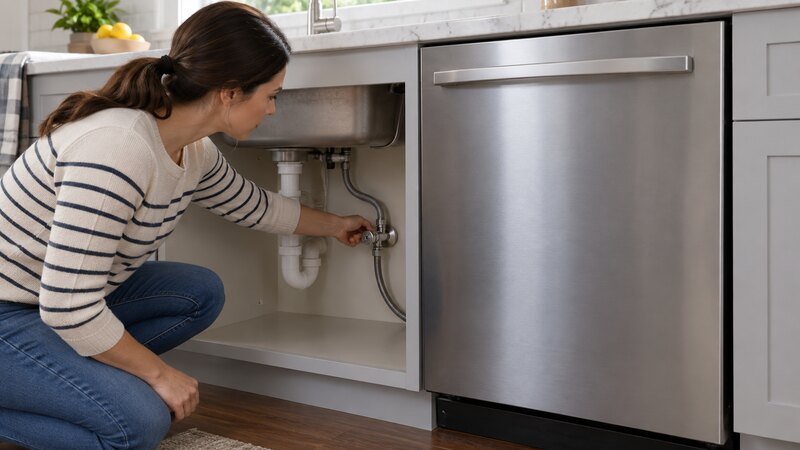
A KitchenAid dishwasher not cleaning dishes usually needs a loading, water-flow, detergent, or maintenance check before a repair. Food residue, film, or an intact detergent pod can each point to a different cause.
Safety first: Turn the appliance off and disconnect power before opening panels or touching internal components.
Normal Behavior vs. a Problem
Dishwashers do not remove all burned-on food without the right cycle, detergent, and loading. A sudden drop in cleaning performance, a pod left intact, cold dishes after a cycle, or food sprayed back onto dishes is not normal.
Common Causes
1. Spray arms cannot turn because of loading or clogged spray holes.
On KitchenAid models, note whether the symptom started after a power outage, a recent installation, or a change in the load. Use the exact model manual for model-specific reset or calibration instructions.
2. The filter, sump area, or water path is blocked by food debris.
On KitchenAid models, note whether the symptom started after a power outage, a recent installation, or a change in the load. Use the exact model manual for model-specific reset or calibration instructions.
3. The detergent is old, damp, unsuitable, or not released properly.
On KitchenAid models, note whether the symptom started after a power outage, a recent installation, or a change in the load. Use the exact model manual for model-specific reset or calibration instructions.
4. Water is not hot enough or the selected cycle is too light for the soil level.
On KitchenAid models, note whether the symptom started after a power outage, a recent installation, or a change in the load. Use the exact model manual for model-specific reset or calibration instructions.
5. A circulation pump, inlet valve, heater, or sensor is not operating correctly.
On KitchenAid models, note whether the symptom started after a power outage, a recent installation, or a change in the load. Use the exact model manual for model-specific reset or calibration instructions.
Safe Step-by-Step Troubleshooting
Step 1
Scrape heavy food but do not use hand-washing liquid in the dishwasher.
Step 2
Load large items so they do not block the spray arms or detergent dispenser.
Step 3
Remove and rinse the filter as the model manual directs.
Step 4
Inspect spray-arm holes and rinse away loose debris; do not enlarge holes with metal tools.
Step 5
Run a suitable heavy cycle with fresh automatic-dishwasher detergent and verify hot water is available.
Step 6
If the dishwasher fills but is unusually quiet, leaves the pod intact, leaks, or shows an error, arrange service.
Components That May Be Involved
Spray arms, filter, sump, circulation pump, inlet valve, detergent dispenser, heating system, turbidity sensor, and control board.. Part numbers and test values are model-specific, so do not replace a part based only on a symptom.
When to Call a Professional
Call a qualified technician if the symptom returns after the safe checks, the appliance trips a breaker, leaks, smells hot or burnt, loses cooling or heat, or needs internal electrical, sealed-system, gas, or disassembly work.
Frequently Asked Questions
W
h
I
t
D
o
S
c
C
a
Y
e
Related Troubleshooting Guides
Dishwasher Not Draining · KitchenAid dishwasher won’t start · Water in Bottom of Dishwasher