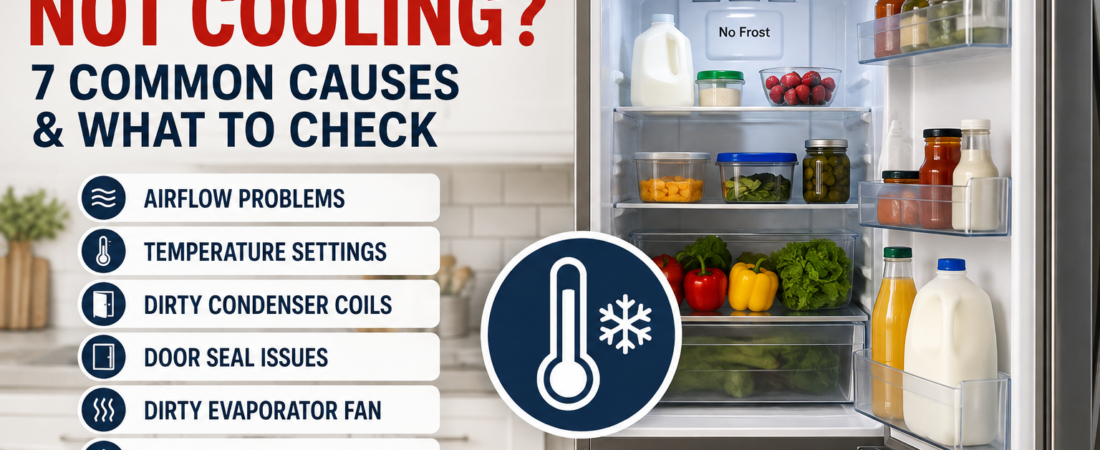
If your refrigerator is running but not getting cold enough, the problem may be simpler than you think. Before calling a repair technician, there are several common causes you can safely check yourself.
Important: Unplug your refrigerator before cleaning, removing panels, or touching internal components. If you suspect an electrical, sealed-system, or refrigerant problem, contact a qualified appliance technician.
1. Check the Temperature Setting
Start with the simplest possibility. Someone may have accidentally changed the refrigerator temperature control.
For most refrigerators, a good target is around 37°F (3°C) for the refrigerator compartment and 0°F (-18°C) for the freezer.
After changing the setting, give the appliance several hours to stabilize before deciding whether the problem is fixed.
2. Make Sure Air Vents Are Not Blocked
Cold air needs to circulate throughout the refrigerator.
Food containers pushed directly against interior vents can restrict airflow and create warm areas inside the fridge.
Check the back and upper sections of the refrigerator compartment and move food away from any visible air vents.
Avoid overfilling the refrigerator. Leaving some open space helps cold air circulate more effectively.
3. Check and Clean the Condenser Coils
Dust, pet hair, and debris can collect around the condenser coils and reduce the refrigerator’s ability to release heat.
Depending on the refrigerator, the coils may be located underneath or behind the appliance.
Unplug the refrigerator before cleaning them. Use a soft brush or vacuum carefully to remove accumulated dust.
If the coils were extremely dirty, cleaning them may improve cooling performance.
4. Inspect the Door Gasket
The rubber seal around the refrigerator door keeps cold air inside.
Look for:
Cracks or tears
Loose sections
Food residue
Areas where the gasket does not make full contact
You can also close the door on a piece of paper. If the paper slides out very easily in several areas, the seal may not be closing tightly.
Clean dirty gaskets with warm water and mild soap.
5. Listen for the Evaporator Fan
Many refrigerators use an evaporator fan to move cold air from the freezer through the appliance.
If the freezer seems cold but the refrigerator compartment is warm, restricted airflow or an evaporator fan problem could be involved.
Listen for the fan when the refrigerator is running. On some models, the fan stops when the door opens, so the door switch may need to be pressed to test it.
If the fan is not running or is making unusual grinding or squealing noises, it may require professional inspection.
6. Check the Condenser Fan
Some refrigerators have a fan near the compressor and condenser coils.
Its job is to help remove heat from the refrigerator.
With the refrigerator unplugged, inspect the area for dust or debris that could prevent the fan from moving freely.
Do not touch electrical components or attempt to repair the motor unless you are qualified to do so.
7. Look for Heavy Frost Buildup
A thick layer of frost or ice on the rear wall of the freezer may indicate a problem with the automatic defrost system.
When ice builds up around the evaporator, cold air may no longer circulate correctly into the refrigerator compartment.
Possible causes can include a defrost heater, sensor, thermostat, control board, or related component.
Diagnosing these components usually requires electrical testing, so this is generally a job for an appliance technician.
Quick Checklist
Before calling for service, check:
Temperature settings
Blocked air vents
Dirty condenser coils
Door seals
Heavy frost buildup
Unusual fan noises
Whether the freezer is still cold
When Should You Call a Professional?
Contact a qualified refrigerator repair technician if:
The refrigerator is completely warm
The compressor repeatedly clicks on and off
You smell burning or notice damaged wiring
A fan or compressor is not operating correctly
Heavy frost quickly returns after defrosting
You suspect a refrigerant leak or sealed-system problem
Refrigerant and sealed-system repairs require specialized equipment and should not be attempted as a DIY repair.
If the refrigerator is cooling normally but the ice maker has stopped producing ice, see our guide to a refrigerator ice maker that is not working.
Frequently Asked Questions
Why is my freezer cold but my refrigerator warm?
This often points to an airflow problem between the freezer and refrigerator compartments. Blocked vents, frost buildup, or an evaporator fan problem are common possibilities.
How long should a refrigerator take to get cold?
After being plugged in or having its temperature adjusted, a refrigerator may need several hours to stabilize. A newly installed or recently unplugged refrigerator can take longer to reach its normal temperature.
Can dirty condenser coils stop a refrigerator from cooling?
Very dirty coils can reduce cooling efficiency because the refrigerator has more difficulty releasing heat. Cleaning them is one of the easiest maintenance checks you can perform.
Is a refrigerator that is not cooling always expensive to repair?
No. Some causes are relatively simple, such as incorrect temperature settings, blocked vents, dirty coils, or a poor door seal. Other problems involving the compressor or sealed refrigeration system can be considerably more expensive.
Related troubleshooting: If the refrigerator is still cooling but has developed a new sound or puddle, use our guides to a refrigerator making a loud noise and a refrigerator leaking water.