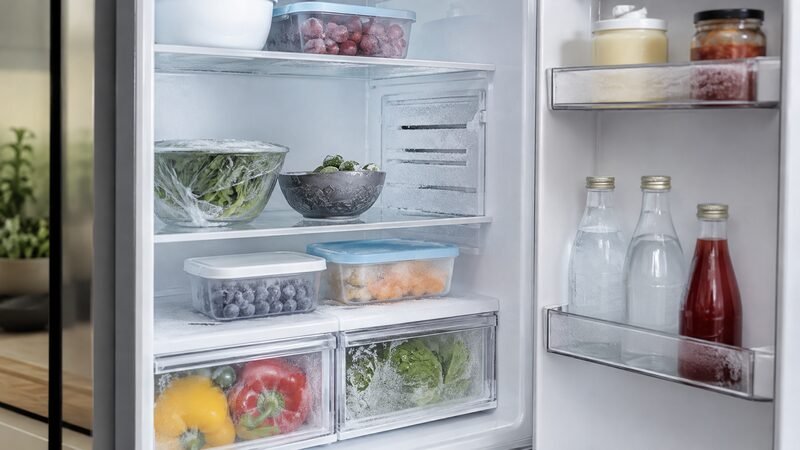
Finding frozen lettuce, milk, or eggs in the fresh-food compartment is frustrating—and it can waste groceries quickly. A refrigerator that freezes food is usually getting too much cold air in one area, running at an incorrect setting, or receiving inaccurate temperature information. Start with the simple checks below before assuming a part has failed.
Safety first: Unplug the refrigerator before cleaning near moving components or removing an interior panel. Do not test live wiring, pierce refrigerant tubing, or use sharp tools to remove ice. If you smell burning, see damaged wiring, or hear the compressor repeatedly click without starting, stop and call a qualified appliance technician.
Why a Refrigerator Freezes Food
Most refrigerators move cold air from the freezer into the fresh-food section. If the airflow is concentrated, the controls are set too cold, or a sensor misreads the temperature, food can freeze even though the appliance still appears to run normally.
1. The temperature setting is too cold
The fresh-food compartment should generally stay near 37°F, while the freezer is commonly set near 0°F. A control set colder than necessary can freeze items, especially after a recent adjustment or power interruption.
2. Food is blocking an air vent
Cold air enters through vents that vary by model. Containers placed directly against a vent can freeze while the rest of the refrigerator stays normal. Overpacking can also prevent air from mixing evenly.
3. Temperature-sensitive food is stored in a cold zone
The back wall, upper shelf near a damper, and areas beside vents may be several degrees colder than the door bins. Leafy produce, eggs, and liquids are especially vulnerable.
4. The refrigerator is not full enough
A nearly empty compartment can experience larger temperature swings because there is less stored food to absorb and distribute cold air. This is more noticeable in garages or rooms with changing temperatures.
5. The damper is stuck open
The damper regulates cold air entering from the freezer. If it is stuck open, too much freezer air may enter the refrigerator. Damper access and testing are model-specific and often require professional service.
6. The thermistor or temperature sensor is inaccurate
A faulty sensor can tell the control board that the compartment is warmer than it really is, causing excessive cooling. Diagnosis normally requires model-specific resistance testing.
7. A control problem is keeping the system running too long
A failed thermostat, electronic control, or related component may prevent normal cycling. This is less common than setting or airflow problems but becomes more likely when temperatures stay well below the target after basic corrections.
Step-by-Step Checks You Can Do Safely
- Measure the actual temperature. Place an appliance thermometer in a glass of water on the middle shelf. Leave it undisturbed for at least 8 hours, then check the reading.
- Return the control to a normal setting. Use the manufacturer’s recommended setting in the owner’s manual. Make one adjustment at a time and allow about 24 hours for the temperature to stabilize.
- Clear the vents. Move food several inches away from visible air outlets and avoid packing items tightly against the back wall.
- Relocate sensitive food. Keep produce, eggs, and beverages away from direct airflow. Use the crisper drawers as intended.
- Check the door seal. Remove crumbs and residue with mild soap and water. A torn or distorted gasket can create uneven operation and should be replaced.
- Look for localized frost. Heavy frost near a damper or back panel may indicate an airflow or defrost issue. Do not chip it away with a knife.
- Recheck temperatures. If the middle shelf remains below about 34°F after a full day at a normal setting, service is appropriate.
When to Call a Refrigerator Technician
Schedule service if food continues to freeze after you verify the temperature setting and clear the vents; the damper appears stuck; the display temperature does not match a reliable thermometer; frost rapidly returns; or the appliance runs nearly nonstop. Sensor, damper, thermostat, and control-board diagnosis is safer with the model’s service information and proper test equipment.
Related Refrigerator Troubleshooting
If part of the refrigerator is warm instead of too cold, see Refrigerator Not Cooling? 7 Common Causes and What to Check. For unusual sounds during long run times, use our refrigerator noise troubleshooting guide. Water on the floor is a separate symptom covered in Why Is My Refrigerator Leaking Water?.
Frequently Asked Questions
Why does food freeze only on the top shelf?
The top shelf may be closest to the cold-air outlet or damper. Move sensitive items away from the vent, leave space for circulation, and confirm the compartment temperature with a thermometer.
Can a bad door seal make refrigerator food freeze?
It can contribute indirectly. Warm air entering through a poor seal may make the refrigerator run longer, creating colder zones elsewhere. Clean the gasket and have it replaced if it is torn or will not sit flat.
How long should I wait after changing the setting?
Allow about 24 hours before judging the result. Repeated adjustments make it difficult to understand how the system is responding.
Is frozen food a sign that the compressor is failing?
Usually not. A failing compressor more often causes inadequate cooling. Food freezing is more commonly related to settings, airflow, a damper, or temperature sensing.