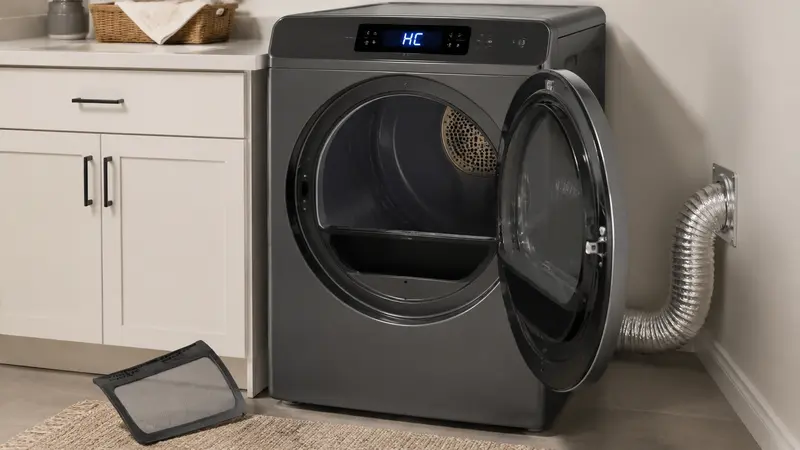
A Samsung dryer HC or HE code is associated with a high-temperature or overheating condition on supported models. Restricted airflow is one of the first things to check because trapped heat can raise dryer temperature and extend drying time.
Do not keep restarting a dryer that repeatedly reports a high-temperature code.
Safety first: Stop using the dryer immediately for a burning smell, smoke, scorched fabric, a damaged cord, or repeated breaker trips.
What Does HC or HE Mean?
Samsung uses HC, HE, and related high-temperature codes on certain dryers.
The exact code can vary by model, so always confirm it in the owner’s manual. The safe first steps focus on airflow and obvious power problems.
7 Safe Checks to Try
1. Clean the Lint Filter
Remove lint from the screen before every load.
If the screen has a coating from dryer sheets or fabric products, clean it only as recommended by the manufacturer and allow it to dry fully before reinstalling.
2. Check the Transition Duct
Inspect the visible duct between the dryer and wall.
It should not be crushed, sharply kinked, or packed with lint. Replace damaged ducting with a type approved for dryer use.
3. Check the Exterior Vent
With the dryer operating only if it is otherwise safe to run, verify that the exterior vent flap opens and that airflow feels strong.
Weak airflow can indicate a restriction deeper in the duct.
4. Do Not Overload the Drum
A tightly packed dryer reduces air circulation and can extend drying time.
Split very large loads and keep bulky items from blocking normal tumbling.
5. Make Sure the Vent Route Is Appropriate
Long, heavily bent, or restricted duct runs can reduce airflow.
Have inaccessible venting professionally inspected and cleaned rather than attempting to reach deep ductwork with improvised tools.
6. Reset the Dryer Once
Samsung commonly recommends disconnecting power briefly as an initial reset for some information codes.
A reset is only a test. If HC/HE returns, do not continue clearing the code without finding the cause.
7. Stop if the Code Returns
A repeated high-temperature code can involve the heating system, sensor, thermostat, wiring, or control.
Those checks require cabinet access and electrical testing.
Why Airflow Matters
A dryer removes moisture by moving heated air through clothing and out of the home.
When exhaust flow is restricted, heat and moisture remain in the system longer. That can increase drying times and operating temperature.
When to Call a Professional
Arrange service if:
- HC/HE returns after airflow checks.
- The exterior vent has strong flow but the code persists.
- The dryer becomes unusually hot to the touch.
- You smell burning or see scorch marks.
- The breaker trips.
- Internal sensor or heater testing is required.
Frequently Asked Questions
Can a clogged vent cause an HC error?
Restricted airflow can contribute to high-temperature conditions and should be checked early.
Should I keep using the dryer if it still dries clothes?
No. A repeated high-temperature code deserves investigation even if the machine still completes a cycle.
Is HC the same as d80?
Not exactly. Codes differ by brand and model. Both can point users toward airflow-related checks, but follow the guidance for the exact code displayed.
Can I test the heater myself?
Internal heater and live-voltage testing should be left to a qualified person.
Related Troubleshooting
If the dryer runs but has no heat, see Dryer Not Heating? 7 Common Causes and Safe Checks. If loads need multiple cycles, see Dryer Taking Too Long to Dry? 8 Causes to Check.