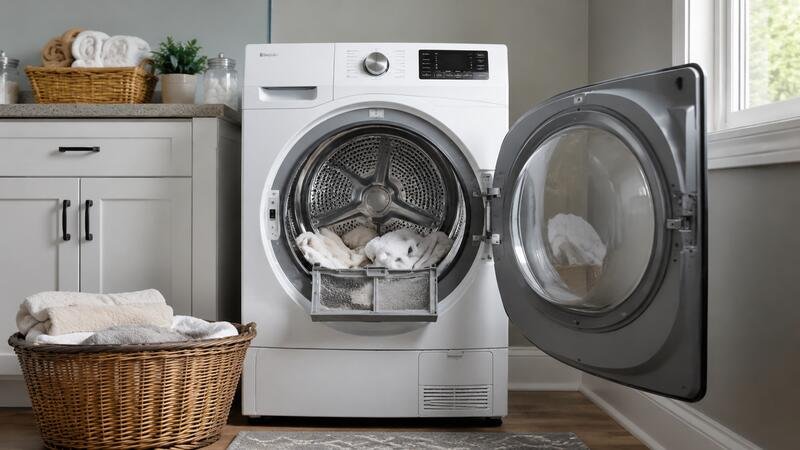
If a dryer tumbles but produces little or no heat, start with airflow, cycle selection, and household power. Electric dryers can run the motor even when one side of the 240-volt supply has tripped, leaving the drum turning without heat.
Safety First
Stop using the dryer if you smell burning, see scorch marks, hear arcing, or find a damaged cord. Never operate a dryer with a disconnected vent, and do not open gas components or test live voltage unless qualified.
7 Common Reasons a Dryer Is Not Heating
1. Air Only or a low-heat cycle is selected
Timed Air, Air Fluff, and some delicate cycles intentionally use no heat or very little heat. Select a heated timed cycle and test the empty dryer for five minutes.
2. The lint screen is blocked
Clean the lint screen after every load. Fabric-softener residue can block airflow even when the screen looks clean; wash it only as permitted by the manual and dry it fully before reinstalling.
3. The exhaust vent is restricted
A crushed transition duct, lint buildup, or stuck exterior flap traps moisture and heat. Check that the outside vent opens strongly during operation. Have the full duct professionally cleaned if airflow is weak or the route is inaccessible.
4. One breaker has tripped on an electric dryer
Most U.S. electric dryers use a double-pole 240-volt circuit. The motor may run while the heater lacks power. With dry hands and no sign of damage, reset both linked breaker poles once. Call an electrician if the breaker trips again.
5. The gas supply is off
For a gas dryer, verify only that the accessible shutoff handle is in the normal open position according to the installation instructions. If you smell gas, do not operate switches; leave the area and contact the gas utility or emergency service.
6. The thermal fuse or heating system has failed
A blown thermal fuse often points to overheating or airflow trouble. Electric models may have a failed element; gas models may have igniter or valve-coil faults. These require disassembly and testing.
7. A temperature sensor or control has failed
A thermistor, thermostat, relay, or control board can interrupt heat. Record error codes and obtain model-specific diagnosis before buying parts.
Safe Troubleshooting Order
- Choose a heated timed cycle.
- Clean the lint screen.
- Check the visible duct and exterior vent airflow.
- Check the appropriate breaker or gas shutoff.
- Run a five-minute empty test and stop for odors, noise, or overheating.
Frequently Asked Questions
Why does the dryer feel warm but clothes stay wet?
Restricted venting, an overloaded drum, or clothes entering too wet can prevent moisture from escaping even when heat is present.
Can I keep using a dryer that takes two cycles?
Do not ignore longer dry times. Lint restrictions waste energy and can create an overheating and fire risk.
Is a heating-element replacement a DIY repair?
It requires opening the cabinet and electrical testing. If you are not trained and equipped, use a qualified technician.
Related: Washer not spinning and dishwasher not draining.
Related troubleshooting: If the dryer still heats but needs multiple cycles, check our long drying time guide. For a new high-pitched noise, see why a dryer squeaks.