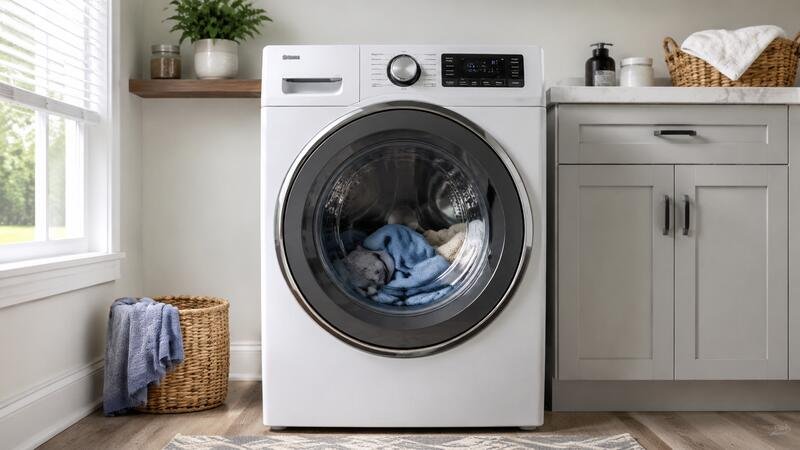
A washing machine not spinning can leave laundry dripping wet, but the cause is often something you can check safely first. A washer not spinning may be responding to an unbalanced or overloaded load, a low-spin setting, a draining problem, or a lid or door that cannot lock; this guide helps you narrow it down before arranging a repair.
What to Check First
- Wait until the cycle has fully finished. Some washers pause while they sense and rebalance the load before high-speed spin.
- Check the selected cycle and spin speed. Do not use No Spin or a low-spin fabric setting when you need water extracted from clothes.
- Redistribute the laundry. Separate one heavy item, such as a comforter or bath mat, and add a few similar items if the load is too small.
- Look through the door or lid for standing water. A washer that cannot drain normally will usually not spin.
- Make sure the cabinet does not rock. All four feet should sit firmly on a solid floor.
Do not force open a locked door or lid. If you need to move the washer, unplug it first and use help rather than pulling on hoses or the power cord.
Common Causes of a Washing Machine Not Spinning
1. An unbalanced load
One blanket, bath mat, or heavy item can collect on one side of the drum. The washer may stop, repeatedly try to rebalance, or reduce its spin speed to prevent damage. Stop the machine, spread items evenly, and add one or two similar items if the load is too small. This is one of the most common answers when a washing machine will not spin during an otherwise normal cycle.
2. The washer is overloaded
A tightly packed drum may not reach full speed. Remove some items and run Drain & Spin. Clothes should move freely rather than being compressed against the drum. A very small load can also be hard to balance, especially when it contains one heavy item.
3. The wrong cycle or spin speed is selected
Hand Wash, Delicate, and No Spin settings intentionally reduce extraction. Check the display and choose the manufacturer-recommended cycle and spin speed for the fabric. If the washer spins slowly but does not leave clothes dry enough, a lower-speed setting may be the explanation rather than a failed part.
4. A drain problem is preventing spin
Most machines will not enter full spin until water has drained. Inspect the accessible drain hose for kinks, crushing, or a blockage at the standpipe. If your manual identifies a user-serviceable drain filter, turn off and unplug the washer before opening it, place towels and a shallow container nearby, and expect residual water. A clogged filter or restricted hose can keep a washer spin cycle from working even when the machine fills and washes normally.
5. The drain pump is blocked or failing
A pump may hum without clearing water if debris is trapped in it. Because access varies by model and draining water can be hot, do not dismantle the cabinet or reach into a pump area with power connected. If the washer holds water, makes a grinding sound while draining, or shows a drain-related error, start with our washer not draining guide or arrange service.
6. The door lock or lid switch is not confirming closed
A front-load washer needs a secure door lock, and many top-load models use a lid switch or lid lock, before spin can begin. Remove clothing caught in the door seal or under the lid, close it firmly, and watch for a lock indicator or error message. Do not bypass, tape down, or alter a lid switch; it is a safety device intended to prevent access to a moving basket.
7. The washer is not level
A machine that rocks diagonally can repeatedly rebalance instead of spinning. Check that all four feet contact a solid floor and adjust the leveling feet only as directed in the installation manual. Severe vibration may also point to a worn suspension component, which needs a model-specific inspection.
8. Excessive suds are interrupting the cycle
Too much detergent, or detergent not intended for a high-efficiency washer, can create excess suds. The washer may add rinses, struggle to drain, or reduce spin performance. Use the detergent type and amount recommended for your machine and local water conditions.
9. The drive belt, motor coupling, or clutch is worn
A motor sound without drum movement, a burning-rubber odor, black debris beneath the machine, or a basket that moves only when empty can indicate a drive problem. Belt, motor-coupling, and clutch designs differ by washer, and accessing them requires cabinet removal. Disconnect power before any internal inspection and leave uncertain mechanical repairs to a technician.
10. A drive motor, speed sensor, or control board fault
If the washer stopped spinning after basic checks, repeated fault codes, breaker trips, no motor response, or a failed spin-only test may indicate an electrical or control issue. These faults require model-specific testing with the appliance disconnected and should not be diagnosed by replacing parts at random.
Washer Drains but Won’t Spin
When a washer drains but won’t spin, the drain path is less likely to be the only problem. Start by redistributing the load, checking the spin-speed setting, and confirming that the lid or door locks correctly. If a washing machine drains but won’t spin even with a small balanced load, common professional-level causes include a worn belt, motor coupling, clutch, drive motor, speed sensor, or control fault. Stop using the washer if it bangs, smells hot, or makes grinding noises.
Washer Won’t Spin and Clothes Are Still Wet
Clothes still wet after the spin cycle can mean the washer spun too slowly rather than not at all. Check for a low-spin or delicate setting, an oversized or undersized load, excessive suds, and partial drainage. A washer not spinning clothes dry may improve with a correctly sized, balanced load and a high-spin setting appropriate for the fabric. If the same issue happens repeatedly with ordinary loads, a drain restriction or drive-related problem needs attention.
Washer Drum Not Spinning
If the washer drum is not spinning, first note whether the washer drains, whether the motor can be heard, and whether the door or lid locks. A washing machine drum not spinning with a working drain may have a load-balance, lid-lock, belt, coupling, clutch, motor, or control issue. With the washer unplugged, do not force the drum; resistance, scraping, or a drum that is difficult to turn by hand is a reason to call for service.
Washer Fills but Won’t Spin
A washer that fills and washes normally can still stop before spin. This is different from a water-supply problem: once filling is complete, check the load, selected spin option, drainage, visible door or lid closure, and cabinet stability. If it does not fill at all, see Washer Not Filling With Water.
Washer Hums but Won’t Spin
A hum without drum movement can occur when the washer is trying to drain, lock, or start the drive system, but the sound alone cannot identify a failed part. Stop testing if the hum is persistent, the drum does not move, there is a burning smell, metal noise, a leak, or a breaker trip. Do not open panels or force the drum.
Washer Stops Before the Spin Cycle
Some washers pause briefly to sense or rebalance the load. A longer stop can be linked to an unbalanced or overloaded load, incomplete drainage, an unsuitable cycle setting, or a door or lid that is not confirmed closed. Correct the safe external causes first; repeated stops with ordinary balanced loads need service.
Safe Reset and Test
- Unplug the washer for one minute if the owner’s manual permits a power reset.
- Reconnect power, select Drain & Spin, and use a small, balanced load.
- Watch for draining before high-speed spin begins.
- Stop the test if the machine bangs violently, leaks, smells hot, or trips the breaker.
If water is reaching the floor, stop the cycle and review our washing machine leak checks before running another test.
When to Call a Technician
Arrange service if the tub will not drain, the latch does not engage, the drum is difficult to turn by hand with power disconnected, or the machine produces grinding, burning odors, electrical faults, or repeated error codes. A technician is also the safer choice when checking a belt, motor coupling, clutch, drive motor, sensor, or control board would require cabinet removal or electrical testing.
Frequently Asked Questions
Why does my washer fill but not spin?
Filling can be normal while a separate balance, drainage, cycle-setting, lid or door-lock, or drive-related issue prevents spin. Check the safe external causes before scheduling service.
Why does my washer hum but not spin?
The sound can come from more than one part of the cycle and does not confirm a failed component. Stop use for persistent humming, no drum movement, burning odor, strong noise, or electrical symptoms.
Should I reset the washer?
A basic power reset may clear a temporary control state if the owner’s manual permits it. It does not repair a recurring drainage, balance, lock, or mechanical problem.
When should I call a technician?
Call for repeated no-spin cycles after basic checks, a drum that will not turn, metal noise, strong vibration, leaks, burning odor, or breaker trips.
Why is my washing machine not spinning?
Start with the load, selected spin speed, drainage, and door or lid lock. If those are normal, a worn drive component or an electrical control fault may be preventing spin.
Why does my washer drain but not spin?
Once drainage is confirmed, check for an unbalanced load, a low-spin setting, and a lid or door that is not locking. Repeated failure with a balanced load can point to a belt, coupling, clutch, motor, sensor, or control issue.
Why are my clothes still wet after the spin cycle?
Common reasons include an unbalanced load, low spin selection, excess detergent, a partial drain restriction, or an overloaded drum. Try a balanced load and the appropriate spin setting first.
Can a clogged drain filter stop a washer from spinning?
Yes. Many washers will not begin full spin until they have drained. Clean only a filter that your model manual identifies as user-serviceable, with the washer unplugged and towels ready for water.
Can an unbalanced load stop the spin cycle?
Yes. Modern washers may pause, slow down, or cancel high-speed spin to limit vibration when they cannot balance the load safely.
Why is the washer drum not spinning?
The cause can range from a load or lock problem to a worn belt, coupling, clutch, motor, or control fault. Avoid forcing the drum or bypassing safety switches; seek service if safe checks do not resolve it.
Related troubleshooting: For an unlevel or violently moving machine, see LG Washer Shaking Violently. For a lid-lock symptom on compatible Whirlpool models, see our Whirlpool lid lock checks. If your top-load washer fills but never begins the wash action, our GE washer agitation guide explains the safe checks.