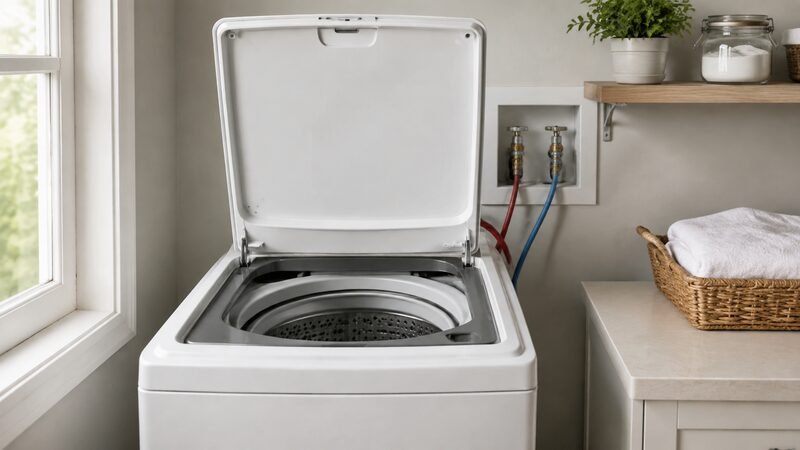
When a washer starts but no water enters—or the tub fills far too slowly—the problem is often outside the machine. Closed faucets, kinked hoses, or debris at the inlet can restrict both top-load and front-load washers. Other causes, such as a failed valve or control, require professional diagnosis.
Safety first: Unplug the washer and close both water faucets before touching hoses. Keep the plug and electrical controls dry. Do not bypass the lid or door lock, probe energized terminals, or operate a washer with a damaged power cord or active leak.
Why a Washing Machine Does Not Fill
1. The cycle is waiting or sensing
High-efficiency washers may pause and sense the load before adding water. Some cycles use less visible water than older machines. Check the display and wait through the normal sensing period described in the owner’s manual.
2. One or both supply faucets are closed
Most washers need both hot and cold supplies, even for a cold cycle. Open both faucets fully and look for leaks around the connections.
3. An inlet hose is kinked
A washer pushed too close to the wall can pinch a hose. Gently move the machine only if the power cord, drain hose, and supply lines have enough slack.
4. The inlet screens are clogged
Small screens at the washer’s water connections catch sediment. Heavy buildup can slow filling. Cleaning procedures vary; never remove screens permanently because they protect the inlet valve.
5. The door or lid is not locking
Many models will not fill normally until the door or lid lock is confirmed. Remove clothing from the latch area and close it firmly without slamming.
6. Water pressure is inadequate
Low household pressure, a plumbing repair, frozen pipe, or partly closed main valve can reduce flow. If nearby faucets are also weak, the problem is likely in the home supply.
7. The inlet valve, pressure sensor, or control has failed
If water reaches the hose connections but the washer remains empty, a component may need testing. A washer that keeps filling can involve the pressure system or valve and should be stopped immediately.
Step-by-Step Checks
- Read the display. Record any error code and consult the model’s manual. Do not repeatedly reset the washer without addressing the code.
- Cancel and restart once. Make sure a Delay Start option is off and select a basic cycle.
- Close the lid or door. Check for fabric, detergent buildup, or a visibly damaged latch.
- Open both faucets fully. Confirm that hot and cold hoses are connected to the correct valves.
- Inspect the hoses. Unplug the washer, close the faucets, and check for kinks, bulges, cracking, or dampness. Replace damaged hoses rather than attempting a patch.
- Check household flow. If you are comfortable disconnecting hoses, place each hose securely in a bucket and briefly open one faucet at a time. Control the hose firmly and stop immediately if flow is unsafe. Skip this step if connections are corroded or space is limited.
- Check inlet screens only as directed. Follow the owner’s manual. Never drill, puncture, or remove the screens.
- Reconnect and watch one fill. Stay nearby and inspect every connection for leaks.
If the Washer Fills and Drains at the Same Time
A drain hose inserted too far down the standpipe can siphon water out as the washer fills. Use the U-shaped hose form and the height and insertion limits in the installation instructions. Do not seal the hose airtight into the standpipe; the drain needs an air gap.
When to Call a Technician
Arrange service if the door will not lock, the inlet valve hums but water does not enter despite good supply flow, the washer overfills, an error returns, or testing would require opening the cabinet. Call a plumber if supply pressure is poor, shutoff valves leak, or the home piping is restricted.
Related Washer Troubleshooting
If the tub contains water but will not empty, see Washer Not Draining?. If the machine fills but does not extract water from clothes, use our washer not spinning guide. For water on the floor, see Washing Machine Leaking Water?.
Frequently Asked Questions
Why does my washer fill slowly on cold but normally on hot?
The cold faucet, hose, inlet screen, or cold side of the inlet valve may be restricted. Compare the supply flow with the washer unplugged and faucets handled safely.
Can a washer run with only the cold-water hose connected?
Many modern models still require both connections and may display an error if one supply is absent. Follow the installation instructions for your exact model.
Why does the washer make a humming sound but no water enters?
The inlet valve may be energized while the supply is closed or restricted. Turn the machine off, verify both faucets and hoses, and schedule service if the hum continues with good supply flow.
Should I remove the inlet screens?
No. They protect the valve from sediment. Clean them only as the manufacturer directs, and replace a damaged valve or screen assembly rather than operating without filtration.