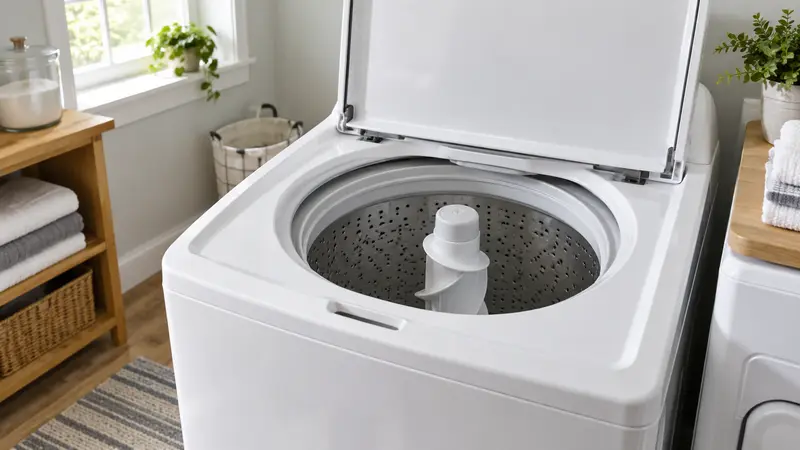
If your GE washer fills but does not agitate, first confirm that the cycle is actually in the wash phase, the lid is fully closed, and the load is balanced. On many GE top-load models, a failed lid switch, worn agitator parts, a drive-system fault, or a model-specific control issue can stop agitation. Do not reach into the tub while the washer is connected to power.
Before You Start: Identify Your GE Washer Type
This guide focuses mainly on GE top-load washers with a center agitator. A GE impeller washer moves clothes with a low-profile wash plate, while a front-load washer tumbles instead of agitating. Controls, reset procedures, and drive parts vary by model. Find the model number under the lid, around the tub opening, or on the rear label, then consult the matching GE manual before removing panels or ordering parts.
Quick Diagnosis: What Does the Washer Still Do?
- Fills but neither agitates nor spins: start with the lid switch or lid lock, power reset, and drive motor system.
- Will not agitate but will spin: the agitator coupling, splines, directional dogs on applicable designs, or mode-shifter system becomes more likely.
- Hums or clicks: stop the cycle and unplug the washer; a jammed drive component or motor problem may be present.
- Shows an error code: record it before resetting and follow the model-specific manual.
8 Common Reasons a GE Washer Will Not Agitate
1. The Cycle Has Not Reached Agitation Yet
Some GE washers pause while sensing the load and water level. A brief delay can be normal, especially on HydroWave and high-efficiency designs. Confirm that Delay Start, Soak, or a paused cycle is not selected. Wait through the normal sensing period described in the manual before assuming there is a fault.
2. The Lid Is Not Closing or Registering
Many GE top-load washers will not agitate or spin unless the lid switch, lid-lock assembly, or magnetic lid sensor reports a closed lid. Inspect the lid strike or magnet for visible damage and remove detergent buildup around the latch. Close the lid firmly without slamming it. If the lid-lock light flashes or the washer repeatedly clicks, do not bypass the safety device.
3. The Load Is Too Large or Unbalanced
A tightly packed tub can prevent proper movement and overload the drive system. Cancel the cycle, wait for the tub to stop, disconnect power, and redistribute the load. Remove several items if clothing is packed above the manufacturer’s loading guidance. Test again with a small, evenly distributed load.
4. The Agitator Is Loose or Its Splines Are Worn
If the motor runs and the basket can spin but the center agitator barely moves, the agitator’s internal coupling or splines may be worn. With the washer unplugged and empty, inspect only what is accessible without forcing covers or fasteners. Excessive free movement, plastic debris, or a loose agitator can point to worn parts. Some GE designs use a one-piece agitator; others use separate upper and lower sections.
5. A Belt or Pulley Is Slipping
On belt-driven GE models, a stretched or broken belt, damaged pulley, or oil contamination can stop agitation. A burning-rubber smell, black residue underneath, or a motor sound without tub movement are clues. Accessing the drive system exposes moving and electrical parts, so panel removal is best left to a qualified technician.
6. The Mode Shifter or Shift Actuator Is Not Engaging
Some GE washers use a mode shifter or actuator to switch the drive between agitation and spin. A washer that spins normally but does not agitate may have a shifter, actuator, wiring, or position-sensing problem. Accurate diagnosis usually requires the model’s service information and electrical testing.
7. The Motor or Motor Control Needs Attention
A stalled motor, damaged wiring connection, or control fault may prevent wash action. You can safely inspect the power cord and wall outlet and perform one approved reset. Do not probe live wiring. Repeated humming, overheating odors, smoke, or a tripped breaker means stop using the appliance.
8. The Gearcase or Transmission Is Worn
Grinding noises, oil beneath the washer, or an agitator that slips despite sound external parts can indicate a gearcase or transmission failure. This repair is model-specific and often involves a heavy tub and drive assembly; professional diagnosis is the safest next step.
Safe Step-by-Step Checks
- Press Pause/Cancel and wait until all movement stops.
- Unplug the washer. Turn off the water valves if you will move the appliance.
- Verify the model type and review the owner’s manual for cycle behavior.
- Check that the lid strike, lock area, and magnetic sensor area are clean and undamaged.
- Reduce and rebalance the load.
- Restore power and run a small-load or empty test cycle while keeping hands out of the tub.
- Listen for the motor and note whether the washer drains and spins.
- Record any error code, flashing light pattern, unusual sound, or odor.
Can You Reset a GE Washer That Does Not Agitate?
A basic electronic reset on many GE washers is to unplug the machine or switch off its dedicated breaker for about two minutes, then restore power. Some older GE HydroWave top-load washers have a specific motor-reset sequence: after unplugging for one minute and reconnecting power, lift and lower the lid six times within 12 seconds, opening it at least two inches and closing it fully. Use that sequence only if the manual confirms your washer is a compatible HydroWave model. It is not a universal reset and will not repair a broken switch, coupling, belt, shifter, or gearcase.
GE Washer Fills but Won’t Agitate
If a GE washer fills but will not agitate, first separate a normal cycle pause from a fault. Some cycles sense the load, add water in stages, or soak before movement begins. Check the cycle display, let the documented sensing period finish, then test a basic normal cycle with a small balanced load. A washer that continues filling without stopping, holds water unexpectedly, or remains inactive indefinitely is not showing a simple agitation delay.
Notice what happens next: a click or repeated lock attempt can point to a lid-condition problem; a hum without movement can indicate a jammed drive component or motor-related fault; and an error code should be recorded before any reset. If the tub never receives the expected water, use our washer not filling guide. If wash action is normal but water remains later in the cycle, use the washer not draining guide. If it washes but cannot complete final spin, see our washer not spinning guide.
When to Call a Professional
Schedule service if the lid lock will not engage, the washer hums without moving, the breaker trips, water is leaking, you smell burning, or the machine needs panel removal or electrical testing. Also call a technician when a GE washer will spin but will not agitate after the load, lid, and model-approved reset checks. Disconnect power and stop using the washer if you see smoke, damaged wiring, or water near electrical components.
Related Washer Troubleshooting
If the tub does not receive the expected water, start with our washer not filling guide. If the tub also fails to spin, see our washer not spinning guide. If water remains in the GE washer, follow these GE washer not draining checks. For a broader drain diagnosis, read why a washer will not drain.
Frequently Asked Questions
Why does my GE washer fill but not agitate?
The washer may still be sensing, or it may not detect a closed lid. An overloaded tub, worn agitator coupling, drive-belt issue, mode-shifter fault, motor problem, or gearcase damage can also stop agitation.
Why will my GE washer spin but not agitate?
Normal spinning makes a complete power failure less likely. Focus on the agitator coupling or splines and, on applicable models, the mode shifter or actuator. The exact parts depend on the model.
Can I test the agitator by hand?
Only with the washer unplugged and the tub completely stopped. Do not force the agitator or remove fasteners unless the model manual provides a safe owner procedure.
Should I bypass the GE washer lid switch?
No. The lid switch or lock is a safety component. Bypassing it can expose you to a moving basket and electrical hazards.
Will resetting the washer fix a failed agitator?
A reset can clear a temporary electronic fault, but it cannot repair worn splines, a broken belt, a failed lid switch, or a damaged gearcase.
How long should a normal sensing or soak pause last?
The exact pause varies by cycle and model. Check the cycle description in the owner’s manual and allow the documented sensing or soak period to finish. A GE washing machine not agitating indefinitely, repeatedly attempting to lock, or displaying an error is not showing a normal pause.
Can an overloaded washer prevent agitation?
Yes. A tightly packed or unbalanced load can prevent normal wash movement and overload the drive system. Remove several items, distribute the remaining load evenly, and test a basic cycle with a small balanced load.
Should I replace the agitator or motor if the GE washer agitator is not working?
Not without a model-specific diagnosis. A GE washing machine agitator not working can result from worn splines or a coupling, but the lid-lock circuit, belt, mode shifter, motor control, or gearcase may produce a similar symptom. If the GE washer won’t agitate but will spin, record that distinction for the technician.
When is it unsafe to retry the washer?
Stop using the washer and disconnect power after smoke, a burning odor, overheating, arcing, active leaking near electrical parts, a hot power cord, or repeated breaker trips. Do not keep resetting or testing the machine under those conditions.