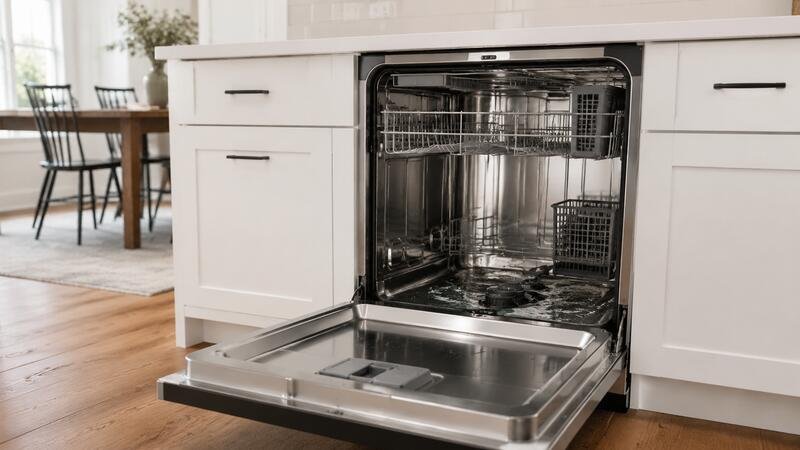
If water appears in the bottom of your dishwasher while it is off or not being used, the source is usually either dirty sink water flowing backward through the drain hose or clean supply water leaking past the inlet valve. This is different from a dishwasher that simply fails to drain at the end of a cycle. The water’s appearance and when it returns can help identify which side is responsible.
First: Is the Water Dirty or Clean?
- Cloudy, gray, smelly, or food-filled water usually points to drain backflow from the sink or garbage disposal.
- Clear water that slowly rises even when the sink is unused more often suggests a leaking dishwasher inlet valve.
- A small, stable amount below the filter may be normal on some models. Check the manual before treating it as a fault.
Take a photo or mark the water level, remove the water, and observe when it returns. Keep the dishwasher off during this test.
Why Water Returns When the Dishwasher Is Off
1. The Drain Hose Has No Proper High Loop
A dishwasher drain hose normally rises high under the counter or connects through an approved air gap, depending on the installation instructions and local plumbing code. If the hose lies low, sink or disposal water can flow backward into the tub. Secure routing must match the exact appliance instructions; do not rely on a universal height.
2. The Sink Air Gap Is Clogged
If your countertop has a small air-gap fitting, remove only its decorative cap and clear visible debris as its instructions allow. Water spilling from the fitting when the sink or dishwasher drains indicates a downstream restriction.
3. The Garbage Disposal or Sink Drain Is Restricted
A slow sink or full disposal can push dirty water toward the dishwasher connection. Run the disposal briefly with cold water if it is safe and functioning. If the sink backs up, stop using the dishwasher and have the household drain cleared.
4. A New Disposal Still Has Its Knockout Plug
If the problem began after a disposal installation, the dishwasher inlet knockout may not have been removed. That usually causes poor draining and can contribute to water returning. Correcting it involves disconnecting the hose, so use an installer or plumber if you are not experienced.
5. The Dishwasher Check Valve Is Not Sealing
Many dishwashers use a check valve or diverter to limit reverse flow. Debris or a damaged valve can let water return even when the external hose routing looks correct. Access varies by model and often requires pump-area disassembly.
6. The Water Inlet Valve Is Leaking
An inlet valve can seep clean water into the tub while the dishwasher is off. If an accessible dishwasher shutoff valve can be closed safely, turn it off temporarily and watch the marked level. If the water stops returning, the supply side is suspect. Do not run the dishwasher with its water supply closed, and arrange valve diagnosis or replacement.
7. A Drain-Hose or Plumbing Connection Is Incorrect
A hose connected in the wrong place, shared improperly with another device, or installed against local code can create siphoning or backflow. Compare the setup with the dishwasher installation manual and local requirements.
Water in the Bottom of a Dishwasher After a Cycle
If water is present as soon as a cycle ends, first treat it as a possible incomplete-drain problem rather than assuming the water returned while the dishwasher was not in use. Standing water, a pool across the tub floor, or dirty water left after a cycle can point to a restricted filter, drain path, hose, or sink connection. Follow the accessible checks in our dishwasher not draining guide.
If the tub is empty after draining but water later reappears while the dishwasher is not being used, use the safe observation steps below to distinguish drain backflow from a possible supply-side leak. A small, stable amount below the filter can be normal on some designs, so check the manual for your model before treating it as a fault.
Safe Step-by-Step Diagnosis
- Switch off the dishwasher and remove the standing water with a cup and towels.
- Photograph or mark the empty level.
- Avoid using the sink and disposal for several hours. Clear water returning anyway suggests the inlet side.
- Next, use the sink normally and observe. Dirty water returning points to drain backflow.
- Inspect the visible drain hose for a high loop, kinks, and a secure connection.
- Check the air gap and whether the sink or disposal drains slowly.
- If safe, temporarily close the dishwasher water shutoff to test for inlet-valve seepage.
Do not use chemical drain cleaner in the dishwasher or a connected sink while diagnosing; it can flow back and create a hazardous service condition. For water that remains immediately after a wash cycle, use the separate dishwasher not draining guide. If water is leaking onto the floor rather than appearing inside the tub, error-code guides such as Samsung dishwasher LC and LG dishwasher AE cover leak detection.
When to Call a Plumber or Appliance Technician
Call a plumber when the sink, disposal, air gap, or household drain backs up, or when the drain-hose installation must be corrected. Call an appliance technician when clean water returns with the machine off, the check valve or pump area needs access, or the dishwasher leaks underneath. Turn off the dishwasher’s water supply and power if the level keeps rising or overflow is possible.
Frequently Asked Questions
Why does dishwasher water return after I run the garbage disposal?
The disposal or drain may be restricted, or the dishwasher hose may lack the required high loop or air gap. Dirty water returning after sink use strongly suggests backflow.
Can a dishwasher fill with water while turned off?
Yes. A leaking inlet valve can allow clean water to seep into the tub even when no cycle is running.
Is water below the dishwasher filter normal?
A small, unchanged amount can be normal on some models. Water that rises, smells bad, covers the tub floor, or returns after removal is not normal.
Why is there standing water in the bottom of my dishwasher after a cycle?
Standing water after a cycle can mean the dishwasher did not drain fully. Check accessible items first, including the filter area, the visible drain hose and the sink or disposal connection. If the tub drains empty and the water returns later, the cause may instead be backflow or a supply-side issue.
Will a high loop fix every backflow problem?
No. It helps prevent backflow when allowed by the installation instructions and local code, but a clogged air gap, blocked disposal, failed check valve, or plumbing error can still require repair.