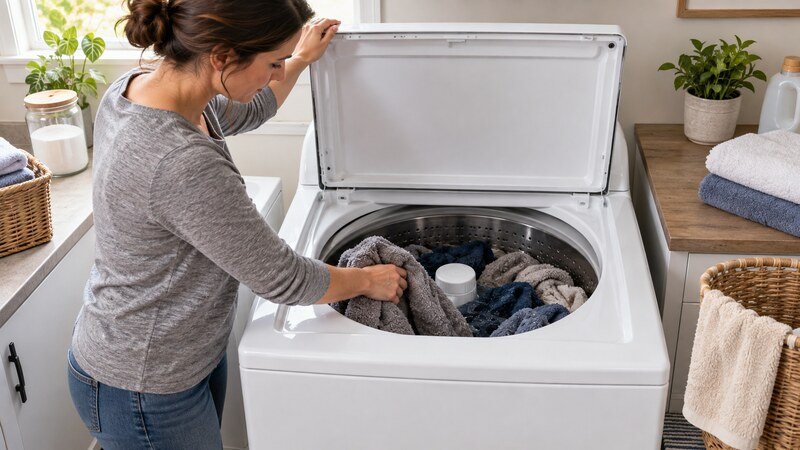
When a Whirlpool washer is not spinning, check the load distribution, selected spin speed, standing water, suds, and lid or door lock before suspecting the drive system. Whirlpool top-load washers may use a belt, splutch, shift actuator, capacitor, or direct-drive system; front loaders use a different door lock, drain filter, motor, and control arrangement. Use the full model number before ordering parts.
Safety first: Stop the appliance and disconnect power before removing a filter cover, access panel, hose, or internal part. Never test energized components. For gas dryers, wiring, a repeatedly tripping breaker, a burning smell, a hot cord, a leak, or major disassembly, use a qualified technician.
What the Symptom Tells You
- Tub still contains water: drainage must complete before high-speed spin.
- Lid-lock light flashes or lock clicks: correct closure or arrange lock service.
- Only bulky loads fail: balance, load size, leveling, or suspension is likely.
- Motor runs but basket does not: drive components need model-specific inspection.
Whirlpool Washer Not Spinning? Step-by-Step Diagnosis
1. Redistribute and Reduce the Load
Pause the washer and arrange towels evenly around a top-load basket. Separate tangled sheets in a front loader. Remove some items if the tub is packed. A waterproof mat or single bulky item may never balance well enough for full spin.
2. Check Cycle and Spin Speed
Delicate, hand-wash, and no-spin selections can leave clothing wetter by design. Select Drain & Spin or a normal cycle with an appropriate spin speed. Do not use a high speed for items whose care labels prohibit it.
3. Make Sure the Washer Drains
Inspect the drain hose for kinks and confirm the standpipe is not backing up. A front-load Whirlpool may have a lower pump filter, but access differs; follow the exact manual and prepare for trapped water. A washer that senses water will usually prevent fast spin.
4. Correct Excess Suds
Too much HE detergent or non-HE detergent can cause extended rinsing and reduced spin. Let suds settle and run an extra rinse without detergent. Measure detergent for load size and water conditions instead of filling to the maximum line automatically.
5. Check Lid or Door Lock
Clear clothing and residue from the strike, then close the lid or door firmly. A flashing lid-lock light or repeated clicking indicates the control is not confirming safe closure. Never bypass the switch or reach into a moving basket.
6. Level the Cabinet
Confirm all four feet touch a firm floor and the washer does not rock. Uneven installation makes balance corrections harder and can cause banging. Adjust feet according to Whirlpool installation instructions and tighten lock nuts if fitted.
7. Try a Basic Power Reset
Turn the washer off and disconnect power for about five minutes, then reconnect and try Drain & Spin. Some models require calibration after particular repairs or moves; use only the procedure for that model. Resetting does not fix a physical blockage or broken part.
8. Inspect Drive-System Symptoms
A worn belt, splutch, shift actuator, clutch, capacitor, or motor can prevent spin on various Whirlpool top loaders. Front loaders use different drive components. Grinding, oil, a burning smell, or a basket that cannot turn normally requires service.
9. Pressure Sensor, Wiring, or Control
A pressure system that falsely reports water, damaged lock wiring, or a control fault can block spin. Electrical diagnosis must be performed with power disconnected and the model service information. Avoid replacing the board before testing simpler causes.
Codes and Model-Specific Clues
Whirlpool lid-lock indications, F# E# codes, and light patterns vary by platform. Record the exact sequence. Drain errors should be solved before spin complaints, and a persistent lock code should not be bypassed.
When to Call a Professional
Schedule professional service when the safe external checks do not solve the problem, the same code returns, or diagnosis requires a meter, internal wiring access, appliance removal, gas work, or major disassembly. Stop immediately for smoke, a burning or gas odor, sparking, a hot plug, a repeated breaker trip, water near electrical parts, or severe mechanical noise. Give the technician the full model number, the exact code, when the failure occurs, and whether a basic test cycle changed the symptom.
Related Troubleshooting Guides
These published guides may help you compare the symptom: Whirlpool lid-lock troubleshooting, general washer spin guide, washer drainage checks.
Frequently Asked Questions
Why does my Whirlpool washer agitate but not spin?
The lid lock, drain system, shift actuator, splutch, belt, clutch, capacitor, motor, or control may be involved.
How do I reset a Whirlpool washer that will not spin?
Disconnect power for about five minutes and retry Drain & Spin. Use model-specific calibration only when documented.
Can a clogged drain hose stop spin?
Yes. Remaining water normally prevents high-speed spin for safety and load control.
Why does the lid-lock light flash?
The lid may not be closing correctly, the strike may be obstructed, or the lock or wiring may have failed.
Are soaking-wet clothes always a spin failure?
No. A low spin setting, imbalance, excess suds, or slow drainage can leave clothes wet even when the basket turns.
Bottom Line
Start with the checks that do not require disassembly: note the cycle behavior, correct the load or installation issue, inspect the accessible airflow or drainage path, and perform only the documented reset for the exact model. If the problem returns, stop guessing and have the relevant safety, drive, sensor, wiring, and control components tested professionally.