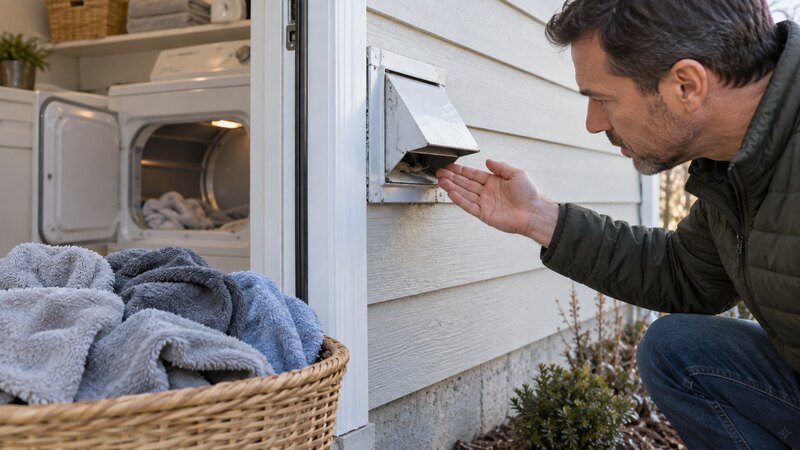
A Maytag dryer that tumbles but produces no heat usually has a supply, cycle, airflow, or heating-system problem. Start with the two-pole breaker on an electric model, the selected cycle, the lint screen, and the full exhaust path. Only then consider an internal fuse, heater, igniter, thermostat, thermistor, or control fault.
This guide focuses on Maytag equipment and the stated symptom. Model designs vary, so compare every step with the owner manual for the full model number before removing a cover or ordering a part.
What the Symptoms Tell You
- The drum turns normally but the air at the exhaust remains cool after several minutes on a heated timed cycle.
- The dryer heats briefly, then cools for the rest of the cycle, which can point to airflow or temperature-control trouble.
- Clothes are warm but still damp, suggesting reduced airflow or an oversized load rather than a complete loss of heat.
- An AF or Check Vent message indicates restricted airflow on supported Maytag models and should be handled before internal parts are considered.
Safe Step-by-Step Diagnosis
1. Confirm the cycle
Use a heated Timed Dry cycle for the test. Air-only, fluff, refresh, or some delicate settings intentionally use little or no heat.
2. Check the supply safely
Electric Maytag dryers require a 240-volt supply. With the dryer off and unplugged when accessible, reset both linked breaker handles once. For gas, only verify the external shutoff valve is open.
3. Clean the lint screen
Remove lint before every load. If fabric-softener residue blocks the mesh, wash the screen with mild soap and water, dry it fully, and reinstall it.
4. Check outside airflow
Run a short heated cycle and confirm the exterior hood opens with a strong stream. Stop the dryer if airflow is weak; a hidden vent restriction can overheat the machine.
5. Try a medium test load
A tightly packed drum cannot move heated air through fabric. A washer that leaves clothes soaking wet can also imitate a dryer heating failure.
6. Record codes and behavior
Record AF, Check Vent, or any F/E code. AF points toward airflow; other codes vary by platform and should be matched to the model manual.
Most Likely Causes
Incomplete power or fuel supply
A half-tripped two-pole breaker can power the drum motor but not the heater. Gas units can run without heat when fuel or ignition is unavailable.
Restricted exhaust airflow
A crushed transition duct, lint-packed wall run, blocked roof cap, or clogged exterior hood can raise temperatures and make the controls reduce or stop heat.
Open thermal fuse or thermal cutoff
These safety devices can open after an overheat event. Replacing one without correcting the vent restriction invites a repeat failure. Never bypass a safety device.
Failed electric heating element
A broken coil can leave the drum turning with cold air. Correct diagnosis requires disconnecting power and testing the model-specific circuit.
Gas ignition problem
On a gas model, the igniter, flame sensor, valve coils, or gas supply may prevent burner operation. Do not loosen gas fittings or test a live ignition circuit.
Thermostat or thermistor fault
A temperature sensor that reports the wrong value can interrupt heat too early. Wiring and resistance specifications vary by model.
Control or relay problem
Maytag sensor-dry systems use moisture and temperature information; a failed relay or sensor can interrupt heat, but overloaded loads and clogged venting are more common.
Reset or Restart Procedure
Turn the dryer off, disconnect power for about one minute, and restore it once. If AF or a heating problem returns, correct the airflow or arrange service.
Components Related to This Problem
Common parts associated with a true no-heat condition include the thermal fuse, thermal cutoff, high-limit thermostat, operating thermostat or thermistor, electric heating element, gas igniter, flame sensor, gas-valve coils, wiring harness, and control-board heater relay. A symptom alone does not identify which part has failed.
When to Call a Professional
Stop troubleshooting and arrange qualified service if you smell gas, see scorched wiring, repeatedly trip a breaker, find water near electrical parts, or need to remove sealed panels. Internal electrical tests must be performed with power disconnected and by someone trained to follow the model-specific service information.
Also call for service when the same code or symptom returns after one safe reset and the external checks pass. Give the technician the model number, complete error code, cycle used, and when the problem occurs.
Related Troubleshooting Guides
- Dryer Not Heating? 7 Common Causes and Safe Checks
- Maytag Dryer AF or Check Vent Code
- Dryer Taking Too Long to Dry? 8 Causes to Check
Frequently Asked Questions
Why is my Maytag dryer running but not heating?
The motor and heating circuits are separate. The drum can turn even when one side of the 240-volt supply is missing, the gas burner cannot ignite, or a safety or heating component is open.
Can a clogged vent make the dryer stop heating?
Yes. Restricted airflow can trigger high temperatures and protective behavior. It can also cause a thermal cutoff to open. Clean the complete route, not only the lint screen.
Is there a reset button?
No single user heat-reset exists across Maytag models. A power cycle may reset electronics, while thermal fuses and cutoffs require diagnosis and replacement after the cause is corrected.
How can I tell whether the heater is bad?
After supply, settings, and airflow are ruled out, a trained technician can inspect the element and test continuity with the appliance disconnected. Visual appearance alone is not conclusive.
Should I keep running it if heat comes and goes?
No. Intermittent heat can reflect restricted airflow, a failing relay, sensor, motor, or gas-valve component. Repeated overheating can create a fire risk.
Bottom Line
Begin with settings, loading, accessible filters or vents, hoses, doors, and external supplies. Stop before live-voltage, gas, sealed refrigeration, or internal motor and control work. A careful symptom record is more useful than replacing a part based on the code or headline alone.