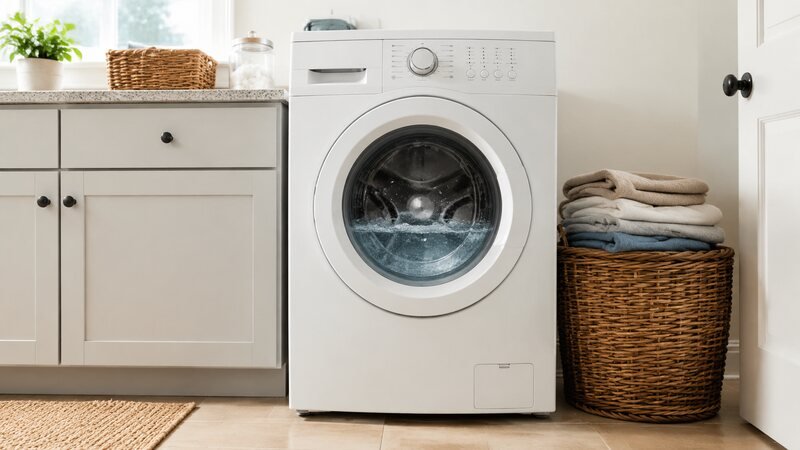
A washer that will not drain may stop with water in the tub, leave clothes soaking wet, or display a drain-related error. The most common checks involve cycle settings, the drain hose, the household standpipe, and—on models designed for user access—the pump filter. Work slowly because trapped water can spill quickly.
Safety first: Do not reach into a washer that is connected to power. Unplug it before inspection. If water is near an outlet or cord, switch off the breaker from a dry location. Never bypass a lid lock or door lock, and do not tilt a water-filled machine by yourself.
Why a washer may not drain
1. The cycle is paused or designed to hold water
Some delicate, soak, or rinse-hold settings pause before the final drain. Check the display and owner’s manual, close the lid or door firmly, and select the model’s Drain & Spin or Cancel/Drain option. If the controls do not respond, follow the manufacturer’s reset procedure rather than repeatedly pressing buttons.
2. The load is unbalanced or too bulky
A washer may slow or stop before draining and spinning if one heavy item shifts to one side. After the machine has stopped and unlocked, redistribute the load or remove a few items. If water leaves but the drum still will not reach spin speed, use our separate washer not spinning guide.
3. The drain hose is kinked, crushed, or blocked
Inspect the hose behind the washer without pulling or twisting its connections. Straighten visible kinks and make sure the appliance is not crushing the hose. Turn off the water valves and unplug the washer before moving it. A damaged hose should be replaced with the specified part.
4. The drain hose is installed incorrectly
A hose pushed too far into a standpipe can cause siphoning or poor drainage. A standpipe that is too low, too high, sealed airtight, or undersized can also create problems. Installation dimensions vary, so compare the setup with the washer’s installation instructions rather than relying on a universal measurement.
5. The household drain is clogged
If water backs up or overflows at the standpipe or utility sink while the washer pumps out, the appliance may be working but the home drain cannot accept the flow. Stop the cycle to prevent water damage. A plumber should address a recurring household drain restriction.
6. The pump filter is clogged
Some front-load washers have a user-cleanable pump filter behind a small lower access door. Coins, lint, buttons, and other debris can block it. Follow the model’s instructions exactly: unplug the washer, allow hot water to cool, place shallow containers and towels nearby, and drain through the emergency hose if provided. Do not open a filter that the manual does not identify as user-serviceable.
7. The lid switch, door lock, drain pump, or control has failed
A failed safety switch may prevent the cycle from advancing, while a humming or silent pump may be jammed or electrically faulty. These diagnoses require access to live-voltage or internal components. Do not bypass locks or test powered parts; call a qualified technician.
Safe step-by-step checks
- Pause the cycle and keep children and pets away from the machine.
- Confirm the selected cycle and try the documented Drain & Spin option.
- Unplug the washer before inspecting it.
- Check the visible drain hose for kinks, crushing, damage, and incorrect placement.
- Watch the standpipe or utility sink for backup when draining, but keep hands away from moving or energized parts.
- If the manual provides a user-cleanable filter procedure, drain the water and clean the filter exactly as directed.
- Run a small test load only after all panels, caps, hoses, and filters are securely returned to position.
How to remove trapped water safely
Use the emergency drain hose if your front-loader provides one. Otherwise, follow the manual’s model-specific procedure. Water may be hot and a full washer holds enough to flood a room, so use shallow containers and drain gradually. Do not remove a large hose or pump cap without controlling the water. If access is unclear, call a technician.
When to stop DIY and call a technician
Get help if the machine is full of hot water, too heavy to move safely, leaks during draining, shows damaged wiring, smells burned, repeatedly trips a breaker, has an inaccessible filter, or still will not drain after hose and installation checks. A jammed or failed pump, lock, pressure system, or control should be serviced professionally.
Frequently asked questions
Why is my washer humming but not draining?
The pump may be trying to run against a blocked hose or filter, or the pump itself may be jammed. Stop the cycle, unplug the washer, and check only the user-accessible items described in the manual.
Can too much detergent stop a washer from draining?
Excess suds—especially from non-HE detergent in a high-efficiency washer—can interfere with sensing and cycle performance. Use the detergent type and amount recommended by the washer and detergent manufacturers.
Why does water return after the washer drains?
An incorrectly positioned drain hose can siphon water, and a restricted household drain can send water back toward the machine. Compare the installation with the manual and call a plumber if the standpipe backs up.
Should I replace the drain pump myself?
Pump replacement requires disassembly and electrical and leak-safe reassembly. Unless the manufacturer supplies a consumer procedure and you have the required skills, use a qualified appliance technician.