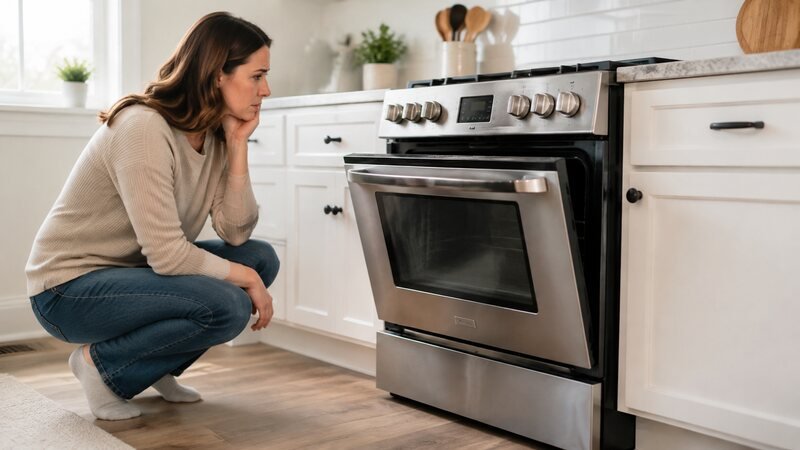
An oven door that will not close all the way should not be ignored. Escaping heat can affect cooking, overheat nearby controls or cabinets, and create a burn hazard. Common causes include an obstructed rack, debris around the frame, a displaced gasket, misaligned hinges, or a latch problem.
Safety first: Do not operate the oven until the door closes and seals normally. Turn the oven off, disconnect power at the breaker or unplug it if accessible, and let every surface cool completely. For a gas range, stop and leave the area if you smell gas, then call the gas utility or emergency service from outside.
Common reasons an oven door will not close
1. A rack or cookware is obstructing the door
Remove cookware and confirm every rack is seated on the correct supports and pushed fully back. Look for foil, a temperature probe cable, or a utensil caught between the door and frame. Never line the oven floor or vents with foil unless the manufacturer explicitly permits it.
2. Food debris is built up around the frame
After the oven is fully cool and power is off, wipe crumbs and hardened residue from the door contact area using the cleaning method approved in the manual. Do not saturate the latch, vents, hinges, or electrical openings, and do not use sharp tools on porcelain or glass.
3. The door gasket is displaced or damaged
A loose section of gasket may prevent even closing, while a flattened, torn, or hardened gasket may allow heat to escape. Some gaskets are designed with an intentional gap, so compare its appearance with the owner’s manual. Re-seat only a gasket the instructions identify as user-adjustable. Use the exact model-specific part for replacement.
4. The hinges are not seated correctly
This is especially likely after the door was removed for cleaning. Oven doors are heavy, and hinge arms are spring-loaded. Do not force them or place fingers near hinge slots. Follow the exact reinstall procedure for the model with another adult assisting, or call a technician.
5. A hinge or spring is bent or worn
If one side sits higher, the door drops abruptly, or it springs open, a hinge component may be damaged. Both sides may need inspection or replacement to restore even alignment. This repair involves heavy glass and high-tension hardware and is usually best left to a professional.
6. The latch or lock is stuck
A self-clean latch can remain extended after an interrupted cycle or control fault. Let the oven cool fully and follow the manufacturer’s documented reset or unlock procedure. Never force the latch, bend it, or start a self-clean cycle merely as an improvised repair. Persistent lock problems require service.
7. The door, frame, or glass assembly is damaged
A warped panel, loose glass, cracked glass, or damaged frame can prevent safe closing. Do not use a door with cracked or shifting glass and do not attempt to straighten structural parts. Arrange service with the model number available.
Safe step-by-step checks
- Turn off the oven, disconnect power, and wait until it is completely cool.
- Remove cookware and verify rack positions.
- Inspect the frame for debris and clean it using the approved method.
- Check the gasket visually for displacement, tears, hardening, or an intentional factory gap.
- Compare the left and right hinges without touching spring-loaded slots.
- Check whether a latch remains extended and use only the model’s documented reset.
- Do not test the oven until the door closes evenly without force and no glass or hardware is loose.
Why you should not cook with the door partly open
A poor seal releases high heat toward the control panel, handles, adjacent cabinetry, and people nearby. It can produce uneven temperatures and cause the oven to run longer. Some ranges also present a tip hazard if weight is placed on an open door. Keep children away and never sit, stand, or place heavy objects on it.
When to stop DIY and call a technician
Call for service if the door was removed and will not reseat, a hinge is bent, a spring is exposed, the latch will not retract, glass is cracked or loose, the door is visibly warped, or it still will not close after obstructions are cleared. If the door closes normally but the appliance does not reach temperature, use our separate oven not heating guide.
Frequently asked questions
Can I use the oven if the door closes almost all the way?
No. Even a small gap can direct heat toward controls and surrounding surfaces and affect cooking. Correct the cause before operating the oven.
Why will my oven door not close after I removed it?
The hinge arms or hinge locks may not be in the exact installation position. Because the door is heavy and the hinges are spring-loaded, follow the model-specific procedure or have a technician reinstall it.
Should an oven gasket have a gap?
Some designs intentionally leave a gap, often near the bottom, while others do not. Do not assume it is damaged; compare it with the owner’s manual or manufacturer parts diagram.
Can I bend the oven latch back into place?
No. Forcing or bending the latch can damage the lock, controls, or door and may create an unsafe condition. Use only the documented unlock procedure and arrange service if it remains stuck.
Related: If the door is locked after a self-clean cycle rather than physically misaligned, use our LG oven door locked safety guide.