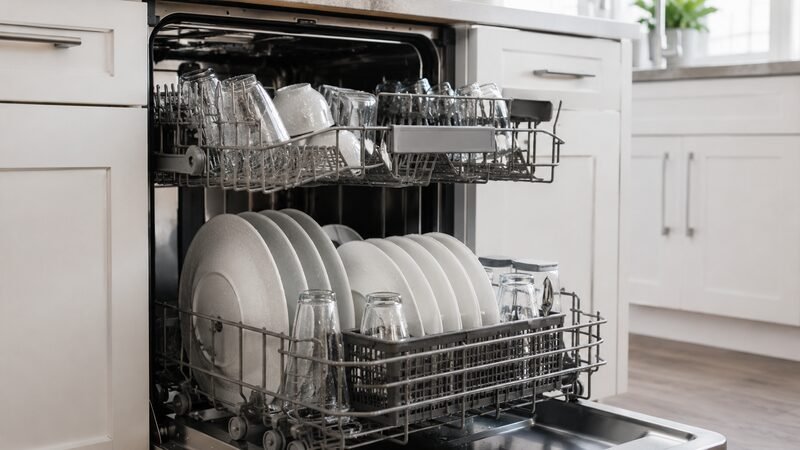
If plates are clean but still covered in water at the end of the cycle, the dishwasher may not be malfunctioning. Many modern ENERGY STAR models use condensation drying and need rinse aid, correct loading, and time after the cycle to produce good results. Persistent standing droplets on every item, however, can also point to a heater, fan, or control issue.
Safety first: Do not reach under the dishwasher or remove panels while it is connected to power. Keep hands away from a hot heating element. If you smell burning, see melted plastic, find water near electrical connections, or the breaker trips, switch the circuit off and call a qualified technician.
Why Dishes Stay Wet
1. Heated Dry was not selected
Eco, Quick, and energy-saving cycles may reduce or omit heated drying. Review the selected options before starting the cycle.
2. The dishwasher uses condensation drying
Condensation models cool the stainless-steel tub so moisture leaves the dishes and collects on the walls. Plastic items retain less heat and commonly stay wetter than glass or ceramic.
3. The rinse-aid dispenser is empty
Rinse aid lowers water’s surface tension so droplets slide off. Fill the dispenser with dishwasher rinse aid and adjust only as the owner’s manual recommends.
4. Dishes are loaded incorrectly
Cups, bowls, and containers that collect water will remain wet. Nesting items and blocked spray arms also reduce rinsing and drying.
5. Incoming water is not hot enough
Many U.S. manufacturers recommend hot water near 120°F at the dishwasher. A distant water heater or low setting can make the initial fill cooler, while excessively hot water creates scald risk and may violate manufacturer guidance.
6. The cycle was interrupted
Opening the door, losing power, or canceling early can skip the final rinse or dry phase. Check for a completed-cycle indicator or error code.
7. The heating element or fan is not operating
Depending on the design, a failed heater, high-limit thermostat, vent fan, or wax motor can reduce drying. These parts require model-specific diagnosis.
8. The vent is blocked
A utensil, towel, or installation problem can obstruct a vent and trap moisture. Vent locations differ, so use the owner’s manual rather than removing trim blindly.
Step-by-Step Drying Checks
- Choose the right cycle. Run a Normal or Auto cycle with Heated Dry, Sanitize, or Extended Dry if your model provides it.
- Fill the rinse-aid dispenser. Wipe up spills and do not substitute dish soap or household chemicals.
- Load for drainage. Angle cups and bowls downward, keep plastic pieces secure, avoid nesting, and ensure both spray arms rotate freely.
- Run the kitchen faucet first. Let hot water reach the nearby sink before starting the dishwasher so the initial fill is not cold.
- Verify safe water temperature. Measure at the faucet carefully with a thermometer. Around 120°F is a common target, but follow your dishwasher and water-heater manuals.
- Wait before unloading. Leave the door closed for 15 to 30 minutes after completion, or crack it open only if the manufacturer permits.
- Unload the lower rack first. This prevents water pooled on upper-rack items from spilling onto dry dishes below.
- Look for a consistent pattern. Wet plastic alone is often normal. A cold interior and wet glassware after every heated cycle suggest a service issue.
When to Call a Dishwasher Technician
Schedule service if Heated Dry is selected but the tub remains cold, an error code returns, the vent fan never runs on a model that uses one, the breaker trips, or you see damage on the element. Do not bypass a thermostat or high-limit safety device. A plumber may be needed if household hot-water delivery is inadequate.
Related Dishwasher Guides
If dishes are also dirty, start with Dishwasher Not Cleaning Dishes?. Water remaining in the tub is a different symptom covered in Dishwasher Not Draining?. Fix drainage and cleaning problems before judging drying performance.
Frequently Asked Questions
Why are plastic dishes wetter than glass?
Plastic does not retain as much heat, so water evaporates more slowly. Use rinse aid, load plastic at an angle, and choose an extended dry option when appropriate.
Should I open the dishwasher door after the cycle?
Some models benefit from the door being cracked after completion, while others have an automatic-open feature. Follow the owner’s manual and keep children away from hot steam.
Can I use vinegar instead of rinse aid?
Use only products approved by the manufacturer. Regular vinegar in a rinse-aid reservoir can damage seals or components, and a bowl of acid may not be recommended for your model.
Does a dishwasher need 120°F water?
About 120°F at the faucet is a common U.S. recommendation for effective washing and drying without excessive scald risk, but the model manual and local plumbing guidance take priority.