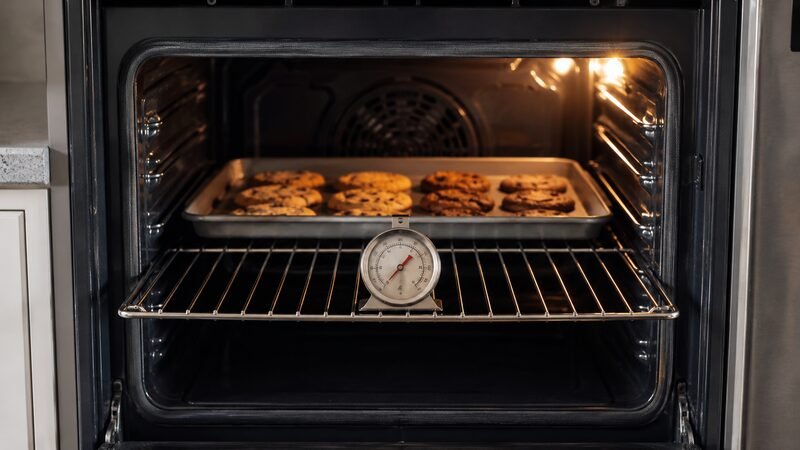
An oven that burns food, leaves the center underdone, or takes longer than expected may not match the set temperature. Normal ovens cycle above and below the target, so one quick reading can be misleading. A careful test over multiple heating cycles can separate a calibration issue from poor airflow, cookware differences, or a failing component.
Safety first: Keep hands and face away from hot air when opening the door. Use dry oven mitts and an oven-rated thermometer. Never touch heating elements, move a temperature sensor while hot, remove panels, test live voltage, or attempt gas-valve or burner adjustments yourself. If you smell gas, turn the oven off, leave the area, and contact the gas utility or emergency service from a safe location.
Why an Oven Runs Too Hot or Too Cold
1. Normal temperature cycling is being mistaken for an error
The elements or burner switch on and off to maintain an average temperature. Individual readings may swing noticeably above and below the set point.
2. The oven was not fully preheated
The preheat tone may sound before the cavity, racks, and walls have stabilized. Heavy cookware or opening the door can extend recovery time.
3. Rack position or airflow is incorrect
A pan too close to the top or bottom heat source can brown unevenly. Foil covering a rack or oven floor blocks circulation and may damage the liner.
4. Cookware changes the result
Dark pans brown faster, glass retains heat, and oversized sheets can restrict airflow. Follow the recipe and appliance manual for pan type and placement.
5. The oven needs calibration
Many electronic ranges allow a small offset so the average actual temperature better matches the display. Calibration does not repair a large or erratic fault.
6. The temperature sensor is displaced or failing
A sensor touching the oven wall can read incorrectly. On many models it appears as a slim probe at the rear, but it should be handled only when cool and exactly as the manual allows.
7. A heating element, igniter, control, or door seal has a problem
A blistered electric element, weak gas igniter, failing relay, or damaged gasket can create slow, uneven, or excessive heat. These conditions need professional diagnosis.
How to Test Oven Temperature Correctly
- Use a reliable thermometer. Choose an oven-rated thermometer with a range that includes 350°F. Do not use an instant-read food thermometer.
- Place it in the center. Put the thermometer on the center of the middle rack, away from the walls and door.
- Set the oven to 350°F. Use conventional Bake unless the manual specifies another test mode. Do not place food in the oven.
- Allow full preheat. Wait for the preheat signal, then allow additional stabilization time recommended by the manufacturer.
- Record several readings. Without opening the door frequently, note the temperature at regular intervals through at least three on-and-off cycles. Use the average, not the highest or lowest number.
- Repeat once. A second test helps confirm that the result is consistent.
How to Calibrate an Oven
Check the owner’s manual for “temperature adjustment,” “offset,” or “calibration.” Button sequences and allowable ranges differ by brand and model. Enter only a small correction based on the average test result, save it, and repeat the test. Do not make the maximum adjustment after a single reading.
Mechanical thermostats, gas pressure, burners, igniters, relays, and temperature sensors are not homeowner calibration points. These require qualified service.
Other Checks Before Scheduling Repair
- Confirm the oven is not in Convection mode when a recipe expects conventional Bake.
- Use the recommended rack and leave space around pans for air circulation.
- Keep foil off the oven floor and do not cover an entire rack.
- Inspect the door gasket when cool for obvious tears or gaps; do not pull it out.
- Check whether the door closes fully using our related guide below.
- Compare results with a simple, repeatable bake rather than one unfamiliar recipe.
When to Call an Oven Technician
Call for service if the average temperature is far from the setting, readings are erratic, calibration does not help, the oven overheats, the element is damaged, the gas burner lights abnormally, or an error code appears. Stop using an oven that produces smoke without food residue, repeatedly trips a breaker, smells of gas, or has a door that will not close.
Related Oven Troubleshooting
If the oven does not warm at all, see Oven Not Heating?. A door that leaks heat or stays ajar is covered in Oven Door Won’t Close?. Correct those problems before relying on a temperature test.
Frequently Asked Questions
Is a 20-degree oven temperature swing normal?
Individual readings can vary as the oven cycles. What matters is the average across several complete cycles and whether cooking results are consistently wrong.
Can I calibrate an oven without a thermometer?
A repeatable manufacturer-approved baking test may indicate a problem, but an oven-rated thermometer gives better evidence. Do not adjust from one burned or underdone dish alone.
How often should I open the door during a test?
As little as possible. Opening the door releases heat and changes the result. Use a thermometer visible through the window if available.
Will calibration fix an oven that heats unevenly?
Not necessarily. Calibration changes the average target temperature. Uneven results can come from rack placement, blocked airflow, cookware, a fan problem, or a weak heating component.