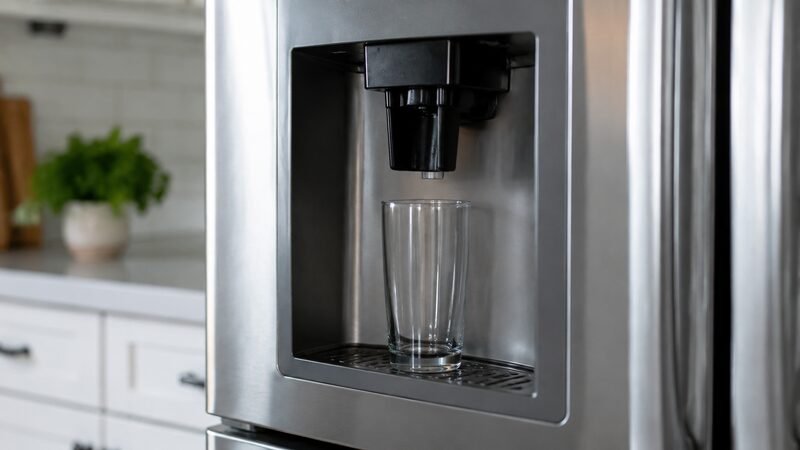
A refrigerator water dispenser can stop flowing suddenly, dispense only a trickle, or work intermittently. The cause may be as simple as a locked control panel or a closed supply valve, but a frozen line, clogged filter, or failed valve can produce the same symptom. Work through these checks in order so you do not replace parts unnecessarily.
Safety first: Unplug the refrigerator before moving it or inspecting accessible tubing. Shut off the household water supply before disconnecting any line. Never test energized valve terminals, force a frozen plastic tube with a sharp object, or apply open flame or a heat gun inside the appliance.
Common Reasons a Refrigerator Dispenser Stops Working
1. The control lock is on
Many U.S. refrigerator models have a control-lock or child-lock feature that disables the dispenser. Look for a lock icon and follow the owner’s manual to unlock it; the required button and hold time vary by model.
2. The refrigerator door is open or the door switch is not registering
Most dispensers stop when a door is open. Make sure all doors close completely and that bins or food are not preventing the switch from engaging.
3. The household water valve is closed
Confirm that the saddle valve or shutoff valve supplying the refrigerator is fully open. Inspect the line behind the appliance for a kink, taking care not to pull the refrigerator onto the tubing.
4. The water filter is clogged or installed incorrectly
A saturated filter can slow or stop water. Use the exact filter specified for your model, install it in the correct direction, and complete the manufacturer’s flushing procedure. An improperly seated filter may also prevent flow.
5. Air is trapped after a filter change
After installation or service, air can cause sputtering. Dispense water in short intervals according to the owner’s manual until the stream becomes steady. Stop if you see a leak.
6. The water line has frozen
A line inside the freezer door can freeze when the freezer is set too cold or the door area is unusually cold. Do not dismantle the door or use concentrated heat; internal wiring and insulation can be damaged.
7. Water pressure is too low
The inlet valve and filter require adequate household pressure. A partially closed valve, kinked supply tube, clogged filter, or home plumbing issue can reduce flow.
8. The dispenser switch or inlet valve has failed
If the controls respond but no water moves after basic checks, the paddle switch, wiring, control, or inlet valve may need model-specific testing by a technician.
Step-by-Step Troubleshooting
- Check the display. Turn off Control Lock and clear any visible filter or door alert using the model’s instructions.
- Close every door firmly. Verify that packages and bins are not interfering with the gasket or door switch.
- Test the ice maker. If both the ice maker and dispenser lack water, focus on the supply valve, tubing, filter, pressure, and inlet valve. If ice production is normal, the problem may be in the dispenser path.
- Inspect the supply. Pull the refrigerator forward only as far as the water line safely allows. Confirm the valve is open and the line is not pinched.
- Check the filter. Verify its part number, installation date, and seating. Replace an overdue or visibly damaged filter with a manufacturer-approved match.
- Dispense safely. Hold a sturdy container under the outlet and test in short intervals. Note whether you hear a hum, click, or no response.
- Review temperatures. Keep the freezer near the manufacturer’s normal setting—commonly around 0°F—and allow 24 hours after an adjustment.
- Stop if water leaks. Shut off the supply and arrange service rather than continuing to operate the dispenser.
When to Call a Technician or Plumber
Call a plumber if pressure is weak at the refrigerator supply connection or the household shutoff valve is corroded or leaking. Call an appliance technician if the line appears frozen inside the door, the dispenser switch does not respond, the inlet valve hums without flow, water leaks inside the cabinet, or electrical diagnosis is required.
Related Refrigerator Guides
If the ice maker also has a problem, see Refrigerator Ice Maker Not Working?. For water under or around the appliance, use our refrigerator leak guide. If temperature problems accompany the dispenser issue, start with Refrigerator Not Cooling?.
Frequently Asked Questions
Why did the dispenser stop after I changed the filter?
The filter may not be fully seated, may be the wrong type, or may contain trapped air. Reinstall it according to the manual and complete the specified flushing procedure.
Can I thaw a frozen dispenser line with a hair dryer?
Do not direct high heat into the door. It can damage plastic tubing, insulation, wiring, or the liner. Correct the temperature setting and have an internal frozen line serviced if it does not recover.
Why is water flow slow but not completely stopped?
A clogged filter, kinked tube, partly closed supply valve, or low household pressure is more likely than a failed switch. Compare flow before and after checking those items.
Does the dispenser work when the refrigerator door is open?
Usually no. A safety interlock commonly disables dispensing when a door is open, so a door-switch or closure problem can mimic a dispenser failure.