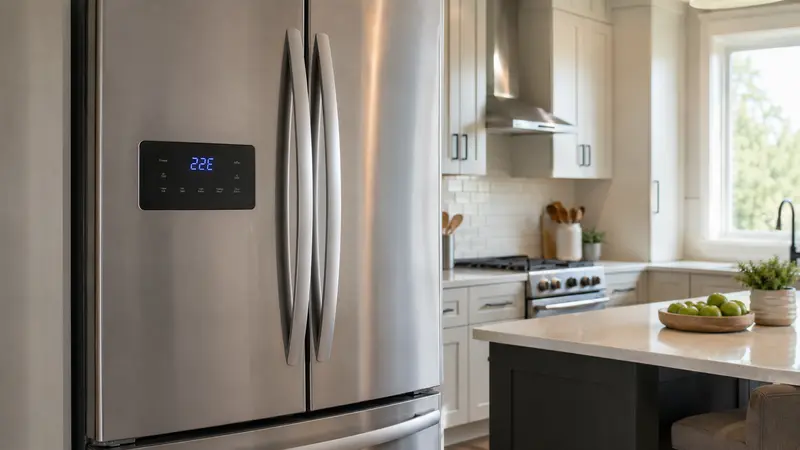
A Samsung refrigerator 22E or 22C error generally points to a refrigerator fan or airflow-related problem on compatible models. It can occur when frost interferes with the fan, but the code alone does not confirm a failed part. First check that doors close fully, food is not blocking interior vents, and there is no visible excess frost; arrange service if cooling is affected or the message returns.
What Does 22E Mean on a Samsung Refrigerator?
Samsung uses 22E (and, on some models, 22C) for a refrigerator fan error. The display convention and exact diagnosis can vary by model family, so use the manual for the exact appliance. The code can be associated with restricted airflow, frost around the fan area, or a fault that needs model-specific service.
What to do first
Keep the doors closed while deciding what to do and protect perishable food. The FDA recommends keeping the refrigerator at 40°F or below. Use an appliance thermometer; move food to another safe refrigerator or an ice-filled cooler if temperatures rise.
Likely causes
- A door was left ajar and moisture froze around the fan.
- Packages are blocking interior air vents.
- A door gasket is dirty, damaged, or not sealing.
- The fan is obstructed or has failed.
- The defrost system, sensor, wiring, or control needs service.
Samsung Refrigerator 22E and Not Cooling
If the 22E error appears with a real loss of cooling, rising temperature, or uneven temperatures, treat it as more urgent than a message alone. Check doors, visible airflow paths, and accessible frost without removing panels. If the refrigerator is not recovering, use these Samsung refrigerator not cooling checks and arrange service rather than continuing to reset the code.
Safe checks
1. Check doors and airflow
Remove packages preventing closure and keep food away from interior vents. Clean gasket contact surfaces with mild soap and water. Do not apply oil or reshape a gasket with high heat.
2. Look for visible frost
Visible ice or frost may interfere with normal air circulation. Do not chip it with tools, use concentrated heat, or remove internal panels. A manual thaw is only appropriate when supported by the instructions for the exact model.
3. Listen without dismantling
A fan may stop when a door opens, so do not defeat door switches. Scraping or rhythmic clicking can suggest ice near a fan; grinding can indicate mechanical damage.
4. Perform a safe manual thaw if appropriate
Samsung’s guidance for this code may call for unplugging the refrigerator and leaving the doors open for several hours. Move food first, unplug the unit, protect the floor with towels, and allow ice to melt naturally. Never chip ice with a tool or use a hair dryer, heat gun, or open flame.
5. Restore power once
When the interior is dry, restore power and monitor the temperature. A returning code is evidence that the underlying fault needs service.
Samsung Refrigerator 22E After a Power Outage
A power interruption does not automatically cause 22E, but recovery after an outage can make an existing airflow or cooling problem more noticeable. Confirm that the refrigerator has power and monitor whether it resumes normal cooling. If 22E returns or temperatures continue to rise, the issue needs further investigation.
Why Does My Samsung Refrigerator Keep Showing 22E?
A recurring 22E after the basic door, airflow, and visible-frost checks needs model-specific diagnosis. A fan, sensor, wiring, defrost, or control issue may be involved, but replacing any part by trial and error is not reliable. Do not remove panels or handle electrical components.
When to call a professional
Arrange service if the code returns, the refrigerator cannot stay at or below 40°F, you smell burning, hear strong mechanical noises, see water near electrical components, or internal panels would need removal. Do not touch fan wiring or energized components.
Related refrigerator guides
For temperature loss, use refrigerator not cooling checks. For fan-like sounds, see refrigerator making a loud noise. If alarms occur without this code, review Samsung refrigerator beeping causes.
Frequently asked questions
What does 22E mean on a Samsung refrigerator?
On compatible models, 22E is a refrigerator fan error. It can be linked to airflow or frost, but the code alone does not identify the failed part.
Why does my Samsung refrigerator show 22E?
It can appear when frost affects the fan area, airflow is restricted, or another fan-system issue requires service.
Can 22E cause a Samsung refrigerator not to cool?
It can accompany reduced or uneven cooling because airflow inside the refrigerator may be affected. Check actual temperature and arrange service if cooling is not recovering.
Why does Samsung refrigerator 22E keep coming back?
A returning code after basic checks suggests the cause needs model-specific diagnosis. Do not keep clearing it without addressing the underlying issue.
Can ice buildup cause a 22E error?
Visible excess frost can interfere with air circulation or a fan on compatible models. Do not use sharp tools or concentrated heat to remove it.
How do I clear 22E on a Samsung refrigerator?
Any reset or recognition step varies by model. Follow the manual for the exact refrigerator; clearing the message does not repair a recurring cause.
Can I keep using my Samsung refrigerator with a 22E code?
Do not rely on it if cooling is falling, temperatures are rising, or the code repeats. Protect perishable food and arrange service when needed.
Does 22E always mean a fan needs replacing?
No. The code does not prove that a single part has failed. Frost, airflow, and other model-specific causes must be considered.
Are 22E and 22C the same issue?
Samsung groups both with a refrigerator fan error, though display conventions vary by model.
Can I clear 22E by unplugging the refrigerator?
A full natural thaw may release an ice-bound fan, but a simple reset does not repair a failed component.
Can I use a hair dryer to remove fan ice?
No. Concentrated heat can damage plastic and wiring and create shock or fire hazards.
Is the food still safe?
Check actual temperature and follow current FDA or USDA food-safety guidance when food has been above 40°F.