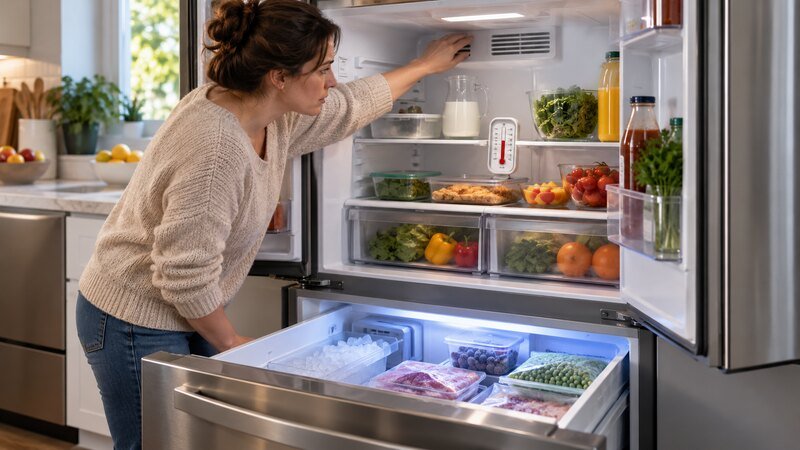
A Samsung refrigerator not defrosting usually shows up as frost on the freezer’s rear panel, reduced airflow, warm fresh food, or a fan that scrapes ice. Check doors and vents first; recurring frost usually needs a defrost-system diagnosis.
Safety first: Unplug the refrigerator before removing panels or touching wiring. Do not use sharp tools or concentrated heat on ice.
Normal Behavior vs. a Problem
A thin, even coating of frost after frequent door openings can be normal. Thick ice behind a panel, a fan scraping sound, or loss of airflow is not normal for a frost-free refrigerator.
Common Causes
1. A door gasket or ice-maker flap is letting humid air enter the compartment.
On Samsung models, note whether the symptom started after a power outage, a recent installation, or a change in the load. Use the exact model manual for model-specific reset or calibration instructions.
2. Food packages are blocking vents and restricting the air path.
On Samsung models, note whether the symptom started after a power outage, a recent installation, or a change in the load. Use the exact model manual for model-specific reset or calibration instructions.
3. The defrost heater, thermal fuse, or sensor is not completing the defrost cycle.
On Samsung models, note whether the symptom started after a power outage, a recent installation, or a change in the load. Use the exact model manual for model-specific reset or calibration instructions.
4. An evaporator fan is obstructed by frost or has failed.
On Samsung models, note whether the symptom started after a power outage, a recent installation, or a change in the load. Use the exact model manual for model-specific reset or calibration instructions.
5. A wiring or control-board fault is interrupting the defrost system.
On Samsung models, note whether the symptom started after a power outage, a recent installation, or a change in the load. Use the exact model manual for model-specific reset or calibration instructions.
Safe Step-by-Step Troubleshooting
Step 1
Check that doors fully close and clean the gasket contact surface.
Step 2
Keep packages away from return vents and rear freezer panels.
Step 3
Record any code and the exact model number before resetting.
Step 4
Power the refrigerator off for five minutes once, then monitor temperatures and frost.
Step 5
Do not use sharp tools, boiling water, or a heat gun inside the cabinet.
Step 6
If frost returns, have the heater, sensor, fuse, fan, wiring, and control tested with power disconnected.
Components That May Be Involved
Door gasket, ice-maker flap, evaporator fan, defrost heater, defrost sensor/thermistor, thermal fuse, harness, and control board.. Part numbers and test values are model-specific, so do not replace a part based only on a symptom.
When to Call a Professional
Call a qualified technician if the symptom returns after the safe checks, the appliance trips a breaker, leaks, smells hot or burnt, loses cooling or heat, or needs internal electrical, sealed-system, gas, or disassembly work.
Frequently Asked Questions
C
a
A
C
a
N
o
W
h
F
r
Related Troubleshooting Guides
Refrigerator Making a Loud Noise · Samsung refrigerator cooling checks · Refrigerator Not Cooling