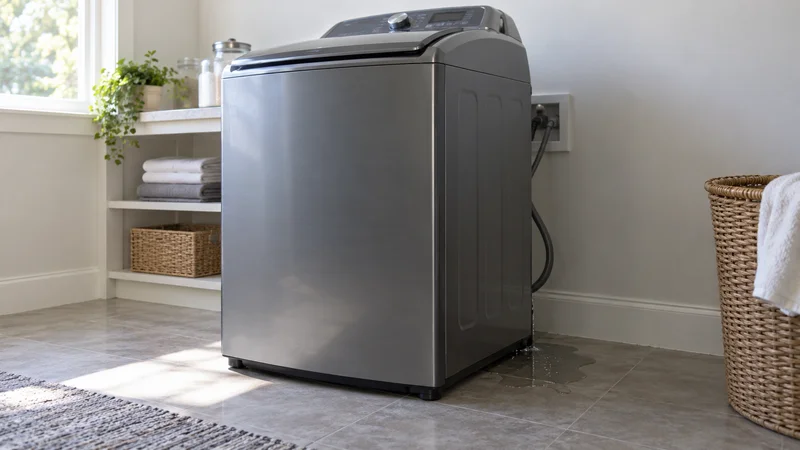
A Samsung top load washer leaking from the bottom or leaking water underneath is often receiving water from above: a rear hose connection, splashover at the tub rim, dispenser runoff, or an overflowing standpipe. If those stay dry, an internal fill hose, drain pump, drain hose, or tub seal may be involved. Do not assume front-load pump-filter instructions apply to a top loader.
Make the Area Safe
Stop the washer, close the hot and cold supply valves, and unplug only from a dry location. Keep hands out from beneath the cabinet and never defeat the lid lock. A large leak, electrical odor, sparking, or a wet outlet requires immediate professional attention.
When Is Your Samsung Top Load Washer Leaking?
Samsung Top Load Washer Leaking During Fill
Check accessible supply hose connections and look for a water trail down the rear panel. If the external hoses are dry, the inlet valve or an internal dispenser/fill hose may be leaking.
Leak During Washing
Overloading, an unbalanced load, or excessive suds can push water over the tub ring. Verify the washer is stable and use the HE detergent amount specified for the load and water conditions. Persistent water from inside the cabinet needs service.
Samsung Top Load Washer Leaking During Drain
Watch the household standpipe or laundry sink. If it rises or overflows, stop the washer and call a plumber. If water instead emerges from the machine, an internal pump, hose, or tub connection is possible.
Samsung Top Load Washer Leaking From Bottom During Spin Cycle
During spin, an overloaded or unbalanced load, excess suds, or strong machine movement can move water from a higher area until it appears underneath. Reduce and redistribute the load, confirm that all four feet are stable, and stop using the washer if water keeps escaping.
Safe Checks in Order
- Dry the area and note the first minute and cycle stage when water appears.
- Inspect visible supply hoses, washers, and valve connections. Replace a damaged hose with the correct rated part; do not patch it.
- Check that the drain hose is not split, kinked, or pulled from its support. Follow the model manual for height and insertion depth.
- Confirm the washer is level and does not rock. Redistribute a bulky load rather than forcing another high-speed spin.
- Check detergent type and dose. Run no further test if suds or water are escaping.
- If one external cause is corrected, observe one short cycle from a safe position. Stop at the first sign of leakage.
Identify Where the Water Is Coming From
Dry the floor before observing from a safe distance. A trail from the rear can point to accessible supply connections; water near the dispenser may run down the cabinet; water that appears only during drain may relate to the drain path. Because water can travel along the outside of the washer, the puddle underneath does not always show its true origin.
Additional Clues That Need Service
Dispenser overflow or water with the washer off
Residue in a bleach or softener dispenser can redirect water inside the cabinet. Clean only removable, user-serviceable pieces as described in the model manual. If water continues to appear while the washer is off and the supply faucets are open, close the faucets and arrange service for the appliance valve or home plumbing.
Water near the center underside
Water near the center underside, especially with rumbling, grinding, rust-colored marks, or repeated leaks, can be consistent with a tub-seal or bearing-area problem. It is not a diagnosis by itself. Do not tilt or disassemble the washer; arrange professional inspection.
Internal hoses and connections
A technician may also consider a dispenser hose, recirculation hose, or other internal connection based on the cycle stage. These components differ by model and should not be accessed as a homeowner repair.
Parts a Technician May Inspect
Depending on the exact model and timing, service may check the inlet valve, internal fill hose, drain pump, drain hose, tub-to-pump hose, outer tub, or drive-shaft/tub seal. The puddle location alone cannot identify the part.
When to Call a Professional
Call for appliance service when water originates inside the cabinet, the washer leaks while off, the tub or bearing area is involved, or the leak returns after external corrections. Call a plumber for a backing-up standpipe or leaking home valve.
Related Guides
For a Samsung washer leak without a top-load focus, see Samsung Washing Machine Leaking. If the leak appears primarily during spin, use Samsung Washing Machine Leaking During Spin Cycle. For a broader bottom-leak diagnosis, see Samsung Washing Machine Leaking From Bottom. If the load becomes unbalanced, use the Samsung washer UB error guide.
FAQ
Does a bottom leak prove the drain pump is bad?
No. Water from a rear hose or tub rim can travel under the washer.
Why does it leak with blankets but not small loads?
A bulky, unbalanced load can increase movement and splashover. Stop and redistribute it; recurring leakage still needs diagnosis.
Can I tilt the washer to look underneath?
No. The machine is heavy and may contain water. Use a technician for underside inspection.
Why is my Samsung top load washer leaking from the bottom?
Trace when the water first appears and inspect accessible supply, drain, dispenser, load, and leveling clues. A puddle underneath can come from water traveling down from above.
Why does it leak while filling?
Check visible inlet-hose and valve connections, then look for a dispenser overflow or an external water trail. Stop if the source cannot be identified safely.
Why does it leak when draining?
A standpipe or laundry sink that backs up is a plumbing problem. If water emerges from the washer itself during drain, professional diagnosis may be needed.
Can too much detergent cause water to leak?
Excess suds can cause splashover or make the leak path harder to identify. Use the detergent type and amount specified for the model and load.
When should I stop using the washer and call a technician?
Stop immediately for a large leak, water near electrical connections, a hot cord or plug, a tripped breaker, burning odor, violent movement, or a leak that persists after basic external checks.
Manufacturer reference: Samsung US washer leak troubleshooting.