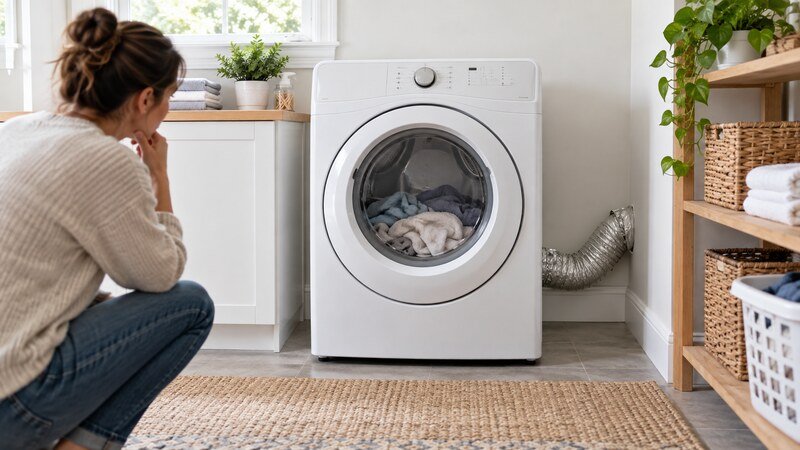
A Whirlpool dryer that shuts off after a few minutes may be completing an automatic cycle too early, overheating because the vent is restricted, losing power, or stopping when a door, motor, temperature-control, or electronic component fails. Start by testing a timed cycle with a normal damp load. The difference between a normal “cycle complete” and a completely dark control panel is an important clue.
Safety first: Stop the appliance and disconnect power before removing a filter cover, access panel, hose, or internal part. Never test energized components. For gas dryers, wiring, a repeatedly tripping breaker, a burning smell, a hot cord, a leak, or major disassembly, use a qualified technician.
What the Symptom Tells You
- Stops only on an automatic cycle: focus on moisture sensing and load size.
- Stops on timed cycles and feels hot: inspect exhaust airflow immediately.
- Stops and hums when restarted: motor or drum drag needs service.
- Breaker trips or controls go dark: discontinue use and check the supply professionally.
Whirlpool Dryer Shuts Off After a Few Minutes? Step-by-Step Diagnosis
1. Compare Automatic and Timed Dry
Use a timed heated cycle with several evenly damp towels. If it continues normally, the dryer may be ending an automatic cycle because the load is not crossing the sensor strips. Check that the selected dryness level is not set to less dry and that a wrinkle-prevention feature is not being mistaken for repeated operation.
2. Correct Load Size and Sensor Contact
Very small loads, mixed fabric weights, and balled sheets produce unreliable moisture readings. Untangle items and add one or two damp towels. Clean the sensor strips with mild soap and a soft cloth. Do not sand them; abrasives can damage their surface.
3. Restore Exhaust Airflow
Clean the lint screen, straighten the transition duct, and check the exterior hood while the dryer is running. Air should be strong and the flap should open freely. A long wall or roof duct can remain clogged even when the short hose behind the dryer looks clean.
4. Look for Door-Latch Movement
A worn latch or intermittent door switch can open electrically as the cabinet vibrates. Confirm that the door closes squarely and that laundry is not trapped at the seal. If pressure on the door changes the symptom, unplug the dryer and arrange repair instead of bypassing the safety circuit.
5. Check Breakers, Plug, and Cord Safely
Reset the paired breaker once for an electric dryer. Gas dryers also need stable electrical power for the motor and controls. A loose receptacle, overheated cord, or repeated breaker trip is not a DIY live-voltage test; stop and call a qualified electrician or appliance technician.
6. Motor Thermal Protector and Drum Drag
A motor may open its internal protector when it overheats. Worn rollers, a binding idler, debris in the blower, or an overloaded drum can increase motor load. If the dryer stops hot and restarts only after cooling, keep it off until a technician checks the drive system.
7. Thermal Controls and Temperature Sensor
A cycling thermostat, high-limit device, thermistor, or associated wiring can produce incorrect temperature control. A blown one-time thermal fuse usually does not reset after cooling, so a dryer that repeatedly returns to life often needs a broader airflow and motor diagnosis.
8. Timer or Electronic Control
Older Whirlpool dryers may use a mechanical timer; newer models may use electronic controls. Worn timer contacts, a loose harness, or a failing relay can interrupt the cycle. Because diagnosis requires energized measurements in some service procedures, leave it to a trained technician.
Codes and Model-Specific Clues
Some Whirlpool models display AF or Check Vent for reduced airflow, while electronic models may show PF after a power interruption. Code families and reset procedures vary widely. Use the model-number manual and correct the physical cause before clearing a message.
When to Call a Professional
Schedule professional service when the safe external checks do not solve the problem, the same code returns, or diagnosis requires a meter, internal wiring access, appliance removal, gas work, or major disassembly. Stop immediately for smoke, a burning or gas odor, sparking, a hot plug, a repeated breaker trip, water near electrical parts, or severe mechanical noise. Give the technician the full model number, the exact code, when the failure occurs, and whether a basic test cycle changed the symptom.
Related Troubleshooting Guides
These published guides may help you compare the symptom: Whirlpool dryer PF error, dryer shutoff diagnosis, dryer taking too long to dry.
Frequently Asked Questions
Why does my Whirlpool dryer shut off on Sensor Dry?
A small load or coated moisture strips may make the control think clothes are dry. Compare with Timed Dry using several damp towels.
Can a bad thermal fuse cause intermittent shutdowns?
A one-time thermal fuse normally stays open after it fails. Intermittent stopping is more consistent with overheating, motor protection, a loose connection, or a control issue.
Why does the dryer hum but not restart?
The motor may be hot, stalled, or working against a binding drum or blower. Disconnect power and request service.
Can I keep restarting the dryer?
Not if it is hot, smells electrical, has weak airflow, or trips a breaker. Repeated restarts can worsen the hazard.
How do I reset a Whirlpool dryer?
A brief power disconnect can reset some electronic controls. It cannot repair mechanical drag, vent restriction, or a failing electrical connection.
Bottom Line
Start with the checks that do not require disassembly: note the cycle behavior, correct the load or installation issue, inspect the accessible airflow or drainage path, and perform only the documented reset for the exact model. If the problem returns, stop guessing and have the relevant safety, drive, sensor, wiring, and control components tested professionally.