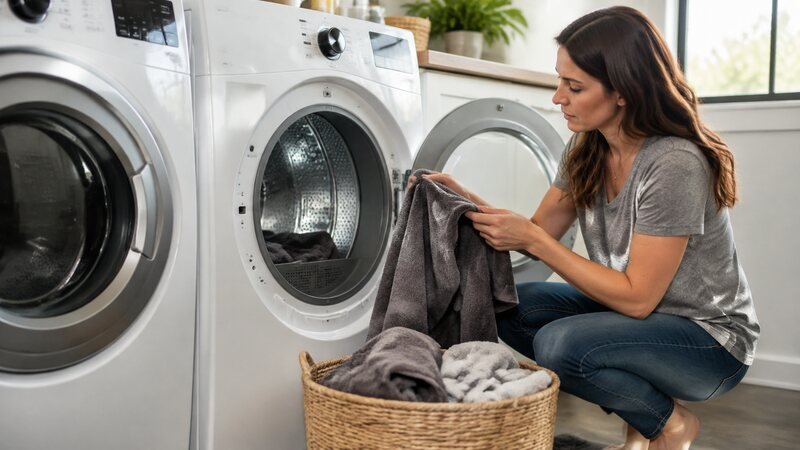
If a dryer takes too long to dry clothes but still produces heat, restricted airflow is often the first concern. An overloaded drum, clogged lint screen, crushed transition duct, blocked exterior vent, unsuitable cycle, or clothes entering too wet can all extend drying time. Because lint is combustible, poor airflow deserves prompt attention.
Safety first: Stop using the dryer if you smell burning, see scorching, hear electrical arcing, or the cabinet, plug, cord, or outlet becomes unusually hot. Unplug an electric dryer before inspection. For a gas dryer, stop if you smell gas, avoid switches and flames, leave the area, and contact the gas utility or emergency service from a safe location.
Common reasons a dryer takes multiple cycles
1. The lint screen is clogged
Clean the lint screen before every load. If fabric-softener residue coats the mesh, airflow may be restricted even when the screen looks clean. Follow the manual’s cleaning directions and let it dry fully before reinstalling it. Never run the dryer without the lint screen.
2. The exhaust duct is kinked, crushed, or blocked
Inspect the transition duct behind the dryer after disconnecting power. It should follow the installation instructions without crushing or excessive bends. Many U.S. installations require rigid or semi-rigid metal ducting; plastic or foil-style materials can be unsafe or noncompliant. Check the current manufacturer instructions and local code rather than improvising.
3. The exterior vent hood has weak airflow
With the dryer reassembled and operating, observe the outdoor hood from outside without reaching into it. The flap should open and airflow should be noticeable. Lint, debris, nests, a long duct run, or hidden damage can restrict the system. Have the entire vent path professionally cleaned or corrected if access is difficult.
4. The load is too large or mixed
Clothes need room to tumble through moving air. Split an overfilled load and dry similar fabrics together. Towels, jeans, comforters, and lightweight shirts dry at different rates. Follow the model’s capacity and bulky-item guidance.
5. Clothes are entering the dryer too wet
Items that are dripping wet will take much longer to dry. Confirm the washer completed its final spin and the load was balanced. If this happens repeatedly, work through our washer not spinning checks before blaming the dryer.
6. The selected cycle or dryness setting is not appropriate
Air-only, low-temperature, delicate, eco, or damp-dry settings may intentionally take longer or leave moisture in fabrics. Automatic cycles also depend on load contact with moisture sensors. Choose the cycle specified for the fabric and clean user-accessible sensor bars only as the owner’s manual directs.
7. The room or installation limits airflow
A dryer installed in a closet needs the ventilation openings specified by the manufacturer. Cold garages, blocked louvers, or inadequate makeup air can affect performance. Do not cover required openings or operate a dryer in an installation that conflicts with its instructions.
8. Heat or airflow components need service
A failing blower, thermostat, sensor, heating element, or gas ignition component may cause long cycles. If there is no heat at all, see our focused dryer not heating guide. Internal testing involves line voltage, gas, sharp metal, and moving parts, so use a qualified technician.
Step-by-step checks
- Clean the lint screen and confirm it is undamaged.
- Try a smaller load of similar fabrics on the appropriate cycle.
- Check whether clothes leave the washer unusually wet.
- Disconnect power and inspect the visible transition duct for crushing, kinks, damage, and unsuitable material.
- Restore the installation and observe whether the exterior vent flap opens during operation.
- Check for warning lights such as Check Vent or Airflow and follow the model’s manual.
- Stop using the dryer and arrange vent or appliance service if airflow remains weak or the machine overheats.
When to stop DIY and call a professional
Call a dryer-vent professional if the duct is concealed, long, damaged, repeatedly clogged, or inaccessible. Call an appliance technician for no heat, overheating, repeated shutdowns, error codes that persist, unusual electrical symptoms, gas odor, or suspected blower, thermostat, sensor, or heater faults. Do not defeat a thermal fuse or safety switch.
Frequently asked questions
Why does my dryer heat but take two cycles?
Heat with slow drying commonly points to restricted airflow, an oversized load, unsuitable cycle selection, or clothes entering too wet. Start with the lint screen, load size, transition duct, and exterior airflow.
How often should a dryer vent be cleaned?
Inspect and clean it as often as the dryer and vent manufacturers recommend and sooner when performance drops. Frequency depends on duct length, use, installation, and household conditions; a professional can assess a concealed run.
Can I use the dryer with a disconnected vent as a test?
Do not vent a dryer into the home. Exhaust contains moisture and lint, and gas-dryer exhaust also contains combustion products. Follow the manufacturer’s diagnostic and installation instructions.
Why do towels take longer than shirts?
Thick fabrics hold more water. Drying heavy and lightweight items together can also cause automatic cycles to end unevenly. Separate similar fabrics and avoid overloading.
Related: If the dryer stops after only a few minutes instead of merely drying slowly, follow our GE dryer shutoff troubleshooting guide.