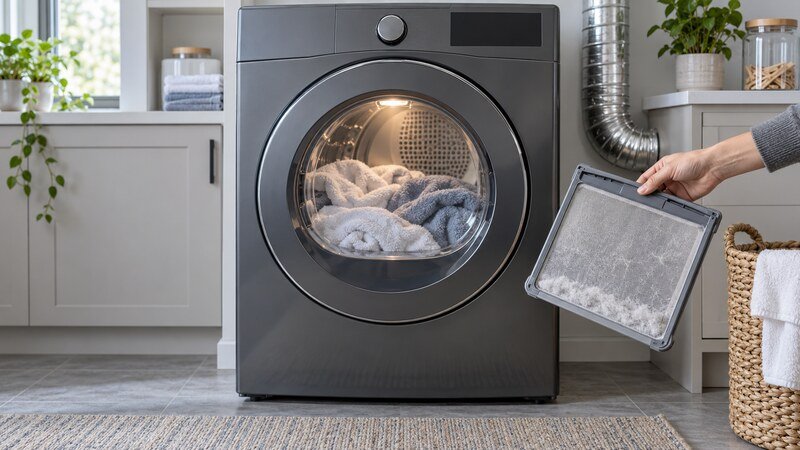
If your LG dryer runs but produces no heat, start by checking the power supply, cycle selection, lint filter, and exhaust vent. An electric LG dryer can tumble even when part of its 240-volt supply has been interrupted, and both electric and gas models may limit heat when airflow is restricted. If those safe checks do not solve the problem, a thermal cutoff, heating element, thermostat, thermistor, or—on a gas model—burner-system component may need professional diagnosis.
This guide works from the easiest checks to the more technical causes. LG features and component locations vary by model, so use your model’s owner’s manual before removing any panel.
LG Dryer Not Heating? Start With These Four Safe Checks
Before assuming an internal part has failed, note exactly what the dryer is doing. Does the drum turn normally? Is the air at the outside vent weak? Does heat appear briefly and then stop? Those details can point you toward the right check.
1. Power Supply or a Tripped Circuit Breaker
Common symptom: The dryer runs but produces no heat, or the display works even though an electric model will not get hot.
Most full-size electric LG dryers require a 240-volt supply through a double-pole breaker. The motor and controls may still operate if only one side of that circuit is interrupted, while the heating element does not receive the power it needs. This is one reason an LG dryer can be running but have no heat.
- Stop the dryer.
- At the electrical panel, locate the dryer’s paired breaker.
- Move the breaker fully to OFF, then firmly back to ON.
- Run a heated cycle with a small load and check for improvement.
Do not remove an outlet cover or test live voltage yourself. If the breaker trips again, the power cord looks damaged, the plug or outlet feels unusually hot, or the dryer shows a power-related code, stop using it and call a qualified electrician or appliance technician.
A gas LG dryer normally uses a standard household electrical supply for the motor and controls, plus a gas supply for heat. Confirm that other devices on the circuit work and that the dryer’s gas shutoff has not been accidentally closed. If you smell gas, leave the area, avoid switches or flames, and contact the gas utility or emergency service. Do not loosen gas fittings.
2. Wrong Dryer Cycle or Setting
Common symptom: The LG dryer is not getting hot, but it otherwise runs normally and no error code appears.
Air Dry and other no-heat options tumble clothes without energizing the heater or burner. Some energy-saving and sensor cycles may also begin with little heat, change temperature during the cycle, or enter a cool-down period near the end. That behavior can be mistaken for a failure.
Choose a normal heated cycle or a timed-dry setting with medium or high heat, then test with a few damp towels. Make sure a no-heat option is not selected. Because control names differ among LG models, check the cycle chart in your owner’s manual rather than assuming every panel uses the same settings.
3. Clogged Lint Filter
Common symptoms: Clothes take too long to dry, the load stays damp, or heat seems weaker than usual.
A lint-covered filter reduces airflow through the drum. The dryer may still make heat, but it cannot move warm, moist air out efficiently. Severe airflow problems can also cause protective temperature controls to cycle the heat off.
- Turn the dryer off and remove the lint filter.
- Roll the lint away with your fingers or a soft brush.
- If fabric-softener residue has coated the screen, wash it with warm water and a small amount of mild dish soap.
- Let the filter dry completely before reinstalling it.
Clean the filter before every load. Do not operate the dryer without it, because lint can enter the ductwork and cabinet.
4. Restricted or Clogged Exhaust Vent
Common symptoms: Weak airflow at the outside vent, long drying times, intermittent heat, unusually warm laundry-room air, or an LG Flow Sense warning.
A restricted exhaust path is one of the most important causes to rule out. Crushed flexible ducting, a lint-packed wall duct, too many bends, or a blocked exterior hood can trap heat and moisture. The dryer may stop heating after running because its safety controls detect excessive temperature.
With the dryer off, inspect the visible vent hose for crushing or sharp bends. Then run a heated cycle and check whether the exterior vent flap opens and produces a strong stream of air. Keep hands away from the moving drum and do not reach into ductwork while the dryer is running. If airflow is weak, stop using the dryer until the full exhaust path has been cleaned or repaired.
Some LG models display d80, d90, or d95 when they detect increasing levels of exhaust restriction. Follow our LG dryer d80 airflow guide for safe, model-aware checks. If your main symptom is slow drying rather than completely cold air, compare it with these causes of a dryer taking too long to dry.
Vent cleaning may require access through walls, a roof outlet, or long duct runs. In those situations, use a professional dryer-vent cleaner rather than improvising with tools that can damage or disconnect the duct.
Internal Causes of an LG Dryer That Won’t Heat
If power, settings, the lint filter, and the entire exhaust path are correct, an internal component may be open, damaged, or giving the control board an inaccurate temperature reading. Disconnect the power cord and switch the dryer breaker off before any panel is removed. Gas models must also have the gas supply shut off by someone who understands the appliance and local safety requirements.
Continuity and resistance checks require a multimeter and the correct wiring diagram. Never test internal parts while the dryer is energized. If you are not trained to identify terminals and isolate a component correctly, schedule service.
5. Thermal Fuse or Thermal Cutoff
Common symptom: The dryer suddenly stops producing heat after previously working, often following a period of slow drying or poor airflow.
LG dryers use temperature safety devices to protect against overheating. Depending on the model, a failed thermal fuse or thermal cutoff may interrupt the heat circuit; some designs can also affect other functions. The exact device, location, and failure behavior are model-specific.
A technician can disconnect the dryer, access the correct component, and test it for continuity. Replacing a blown safety device without correcting the reason it overheated is not a complete repair. The lint filter, blower path, vent hose, wall duct, and exterior outlet should all be checked before the dryer returns to service.
6. Failed Heating Element—or a Gas Burner Problem
Common symptom on an electric dryer: The drum turns and airflow is normal, but the air stays cold on every heated cycle.
Electric LG dryers use a heating assembly. A broken heating coil, damaged terminal, or open safety device in that assembly can leave the dryer running with no heat. In some failures, only part of the coil is damaged, so the dryer heats weakly or takes much longer than normal.
Inspecting or testing a heating element requires disconnecting power, removing panels, and using the model’s wiring information. Burned wiring, repeated breaker trips, or a failed element should be handled by a qualified technician.
Gas LG dryers do not use an electric heating element to heat the load. They use a burner system that may include an igniter, flame sensor, gas valve coils, and other model-specific controls. If a gas dryer tumbles but never warms, or if the burner lights briefly and then stops repeatedly, have a trained gas-appliance technician diagnose it. Do not attempt to adjust the burner or bypass a safety device.
7. Thermostat or Thermistor Problem
Common symptoms: The dryer heats intermittently, stops heating after several minutes, overheats, or ends a cycle while clothes are still damp.
A thermostat switches the heat circuit in response to temperature. A thermistor changes resistance as temperature changes and sends that information to the electronic control. If one is out of range—or if its wiring is damaged—the dryer may cycle heat incorrectly even when the heater or burner can work.
Some LG models can display a temperature-sensor code such as tE3, but codes and diagnostic procedures vary. Record the full code and model number before requesting service. A technician can use the correct service data to test the sensor, its harness, and the control rather than replacing parts by guesswork.
What LG Error Codes May Mean
Not every LG dryer uses the same display or codes, but these are useful clues on supported models:
- d80, d90, or d95: The dryer has detected a restricted exhaust path. Check the lint filter, transition hose, wall duct, and exterior outlet.
- nP or PS: The dryer has detected a power-supply or voltage problem. This is especially relevant when an electric dryer runs but does not heat. Have the outlet, cord, and circuit checked safely.
- tE3: A thermistor or temperature-sensing problem may be present. Service may be required.
Use the manual for your exact model to interpret a code. A code is a diagnostic clue, not permission to bypass a switch or work on an energized appliance.
Quick Symptom Guide
- Dryer runs but produces no heat: Check the electric dryer’s paired breaker, cycle setting, and then model-specific heating components.
- Clothes take too long to dry: Clean the lint filter and inspect the complete exhaust path before suspecting a part.
- Weak airflow outside: Look for crushed ducting, lint buildup, or a blocked exterior hood.
- Heat works sometimes but not always: Rule out sensor-cycle behavior and vent restriction; then consider a thermostat, thermistor, loose connection, or gas valve coil diagnosis.
- Dryer stops heating after running: Overheating from poor airflow or a temperature-control fault is possible.
When to Call a Professional
Call a qualified appliance technician when the safe external checks do not restore heat, or when diagnosis requires cabinet disassembly, a multimeter, internal wiring access, or gas-system work. Also stop using the dryer and request service if:
- The breaker trips again after one proper reset.
- The plug, cord, outlet, or dryer smells burned or shows heat damage.
- You smell gas or suspect a burner or gas-valve problem.
- The dryer overheats, shuts down repeatedly, or shows a persistent error code.
- The vent travels through a wall or roof and cannot be fully cleaned safely.
- A thermal fuse or cutoff has failed and the overheating cause is unknown.
Have the dryer’s full model number and the displayed code ready when you call. LG electric and gas dryers use different heating systems, and even similar-looking models may require different parts and test values. For a broader overview of non-brand-specific faults, see our dryer not heating troubleshooting guide.
Frequently Asked Questions
Why is my LG dryer running but not heating?
An electric LG dryer may tumble with only part of its 240-volt supply available, so reset both sides of the paired dryer breaker. Also confirm a heated cycle is selected, clean the lint filter, and check for strong outside airflow. If those checks pass, an internal safety device, heating element, thermostat, or thermistor may need testing. A gas model instead requires diagnosis of its gas supply and burner system.
Is there a reset button on an LG dryer?
There is no universal external reset button on every LG dryer. A basic power cycle may clear a temporary control issue: turn the dryer off, unplug it or switch its breaker off for about one minute, then restore power. This will not repair a failed component, blocked vent, wiring problem, or interrupted gas supply. Follow the owner’s manual for your exact model.
Can a clogged vent cause an LG dryer not to heat?
Yes. A restricted vent traps heat and moisture, increases drying time, and can cause protective controls to reduce or interrupt heating. Weak airflow and d80, d90, or d95 warnings are strong reasons to inspect and clean the entire exhaust path before replacing parts.
How do I know if my LG dryer heating element is bad?
On an electric model, a bad element is possible when the drum turns, the vent has strong airflow, the correct heated cycle is selected, and the full power supply is available, yet the air remains cold. Confirmation normally requires disconnecting power, opening the cabinet, and testing the heating circuit with the correct meter procedure. A gas dryer does not use this type of heating element.
Why does my LG dryer heat sometimes but not always?
Intermittent heat can result from normal sensor-cycle or cool-down behavior, but it can also point to a restricted vent, overheating safety control, thermostat or thermistor fault, loose electrical connection, or—on a gas dryer—failing burner components. Note when the heat stops, test a timed heated cycle, and verify airflow. If the pattern continues, arrange professional diagnosis.
Bottom Line
When an LG dryer is not heating, the safest first steps are to reset the correct breaker, select a true heated cycle, clean the lint filter, and verify strong exhaust airflow. Those checks solve common problems and protect the dryer from overheating. If the dryer still will not heat, use the exact model number to guide professional testing of the electric heating circuit, gas burner system, thermal safety devices, and temperature sensors.