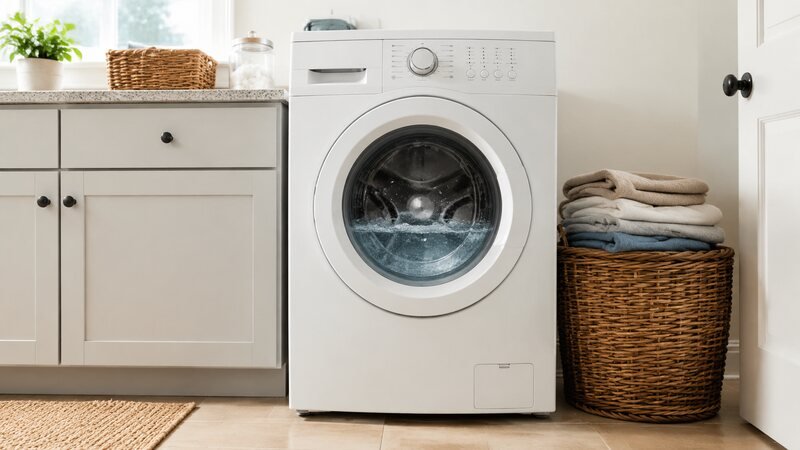
If your GE washer is not draining, first confirm the cycle was not paused, redistribute the load, and inspect the drain hose for a kink. On models with an owner-accessible pump filter, clean it only as directed in the exact manual. GE top-load and front-load washers use different drain layouts, so do not assume every model has the same filter or access panel.
Make the Washer Safe First
Unplug the washer before reaching near the tub, pump filter, or hose. Standing wash water can be hot and heavy. Keep towels and a shallow pan ready, and use the emergency drain tube only if your model provides one. Never bypass the lid or door lock and never reach into a washer that is energized.
Common Causes of a GE Washer That Will Not Drain
1. The Cycle Is Paused or the Lid/Door Is Not Latched
A washer may stop before drain or spin if the lid or door is open, an item blocks the latch, or the control is paused. Remove trapped clothing, close the lid or door firmly, and press Start. A damaged latch usually requires service.
2. The Load Is Unbalanced
A blanket or a few heavy items can collect on one side and prevent the final spin. Pause the machine, wait for the lock to release, redistribute the load, and run Drain & Spin. Do not force the lid or door.
3. The Drain Hose Is Kinked or Positioned Incorrectly
Inspect the visible hose for crushing, sharp bends, or a connection pushed too far into the standpipe. Installation height and insertion depth depend on the model. Compare the setup with the GE installation instructions rather than guessing.
4. The Pump Filter Is Clogged on an Applicable Model
Some GE front-load washers have an accessible pump filter; many top-load models do not offer the same owner access. If your manual shows a filter door, unplug the washer, drain the water slowly, then remove lint, coins, and small items. Refit the filter seal carefully to prevent leaks.
5. Too Much Detergent Created Excess Suds
Non-HE detergent or too much HE detergent can slow draining and spinning. Follow the detergent label and washer manual. If suds are visible, let them settle and use the model’s rinse/drain instructions—do not add more detergent.
6. The Household Standpipe or Drain Is Blocked
If water rises or overflows from the standpipe while the pump runs, stop the washer. That points to a plumbing restriction. A plumber should clear the household drain; chemical drain cleaner can create a hazardous spill around the washer hose.
7. The Drain Pump Is Jammed or Failed
A hum with little water movement may indicate debris in the pump; silence may indicate a pump, wiring, latch, or control fault. Internal access is model-specific and should be left to a technician if it requires tipping the washer or removing panels.
8. A Lid Switch, Pressure Sensor, or Control Has Failed
If basic checks pass but the washer never commands a drain or shows a recurring fault code, a technician may need to run the model’s diagnostic procedure and test components safely.
GE Washer Has Water in the Drum and Won’t Drain
If water remains in the drum, stop the cycle and do not force the lid or door. A complete drain failure means little or no water leaves; slow draining may still leave water or delay the spin cycle. Start with the visible hose, standpipe, load, and detergent checks below before arranging service.
Safe Step-by-Step Check
- Cancel the cycle and wait for the lock to release.
- Redistribute or reduce the load.
- Run Drain & Spin once.
- Unplug the washer if water remains.
- Inspect the visible drain hose and standpipe.
- Clean an owner-accessible pump filter only if the model manual shows the procedure.
- Restore power and test once while watching the standpipe and floor for leaks.
For a broader checklist, see washer not draining. If the water leaves but the basket does not accelerate, use the washer not spinning guide. A GE washer that fills but does not move the load may instead match our GE washer not agitating article.
GE Washer Not Draining or Spinning
A GE washer may refuse to spin when it cannot drain enough water safely. If the water leaves but the basket still will not accelerate, the problem may be separate from drainage; see our GE washer not spinning guide. If it neither drains nor spins, begin with the drain path, load, lid or door, and cycle checks rather than assuming an internal part has failed.
GE Washer Drains Slowly
Slow drainage can look like a long pause before spin, water left in the drum, or an intermittent failure. Check the visible hose for a kink or crush, confirm the standpipe is not backing up, and let excess suds settle. Do not use chemical drain cleaner with the washer hose connected.
GE Washer Hums but Won’t Drain
A hum can be a useful clue, but it does not prove that one specific part has failed. It may occur with a restricted drain path or an internal issue that needs model-specific service. Stop using the washer if the hum is loud or persistent, or if it comes with a burning smell, leak, or breaker trip.
When to Call a Professional
Stop and arrange service for a locked door with hot water inside, repeated breaker or GFCI trips, a burning smell, water leaking from beneath the cabinet, a damaged power cord, or any repair requiring internal electrical access. Call a plumber if the standpipe backs up; call an appliance technician if only the washer fails to pump out.
Frequently Asked Questions
Where is the drain filter on a GE washer?
Its location depends on the model, and some GE top-load washers do not have an owner-cleanable pump filter. Check the model-specific manual before opening any panel.
Why are my clothes still wet after the water drains?
The washer may have a separate spin problem caused by imbalance, excess suds, a latch fault, or a drive-system issue.
Can I force a GE washer door open?
No. Unplug the washer and use only the manual’s emergency-release procedure, if provided. Forcing the lock can cause damage and a sudden water spill.
Can I put drain cleaner in the washer standpipe?
Do not do so while the washer hose is connected. Chemical splashback can injure you and damage the appliance; contact a plumber for a blocked household drain.
Why is my GE washer not draining?
Common possibilities include a paused cycle, an unbalanced load, a kinked hose, excess suds, a restricted household drain, or a model-specific internal fault. Start with the visible, safe checks before arranging service.
Why is there water left in my GE washer?
Water left in the drum can mean the washer drained slowly or did not drain fully. Check the load, visible drain hose, standpipe, and any owner-accessible filter identified in the manual.
Why is my GE washer not draining or spinning?
Many washers will not enter a fast spin until they have drained. If it drains but still will not spin, that points to a separate spin-cycle issue.
Why does my GE washer drain slowly?
A restricted hose, a household drain that is backing up, or excess suds can slow the process. Avoid forcing repeated cycles if water remains or the machine behaves abnormally.
Can a drain hose cause a GE washer not to drain?
Yes. A visible kink, crushed section, or incorrect connection can restrict flow. Compare the setup with the installation instructions for the exact model.
Can too much detergent affect draining?
Yes. Excess suds can interfere with draining and spinning. Use only the detergent type and amount appropriate for the washer and load.
Should I reset the washer?
A reset can clear a temporary interruption but does not repair a recurring drainage problem. Follow the reset procedure in the model manual and investigate the cause if the symptom returns.
When should I call a technician?
Arrange service for persistent standing water, repeated humming, abnormal noises, a leak, electrical symptoms, or any issue that requires opening panels or accessing internal components.